The Galápagos Without a Cruise: Three Islands in Twelve Days by Public Ferry
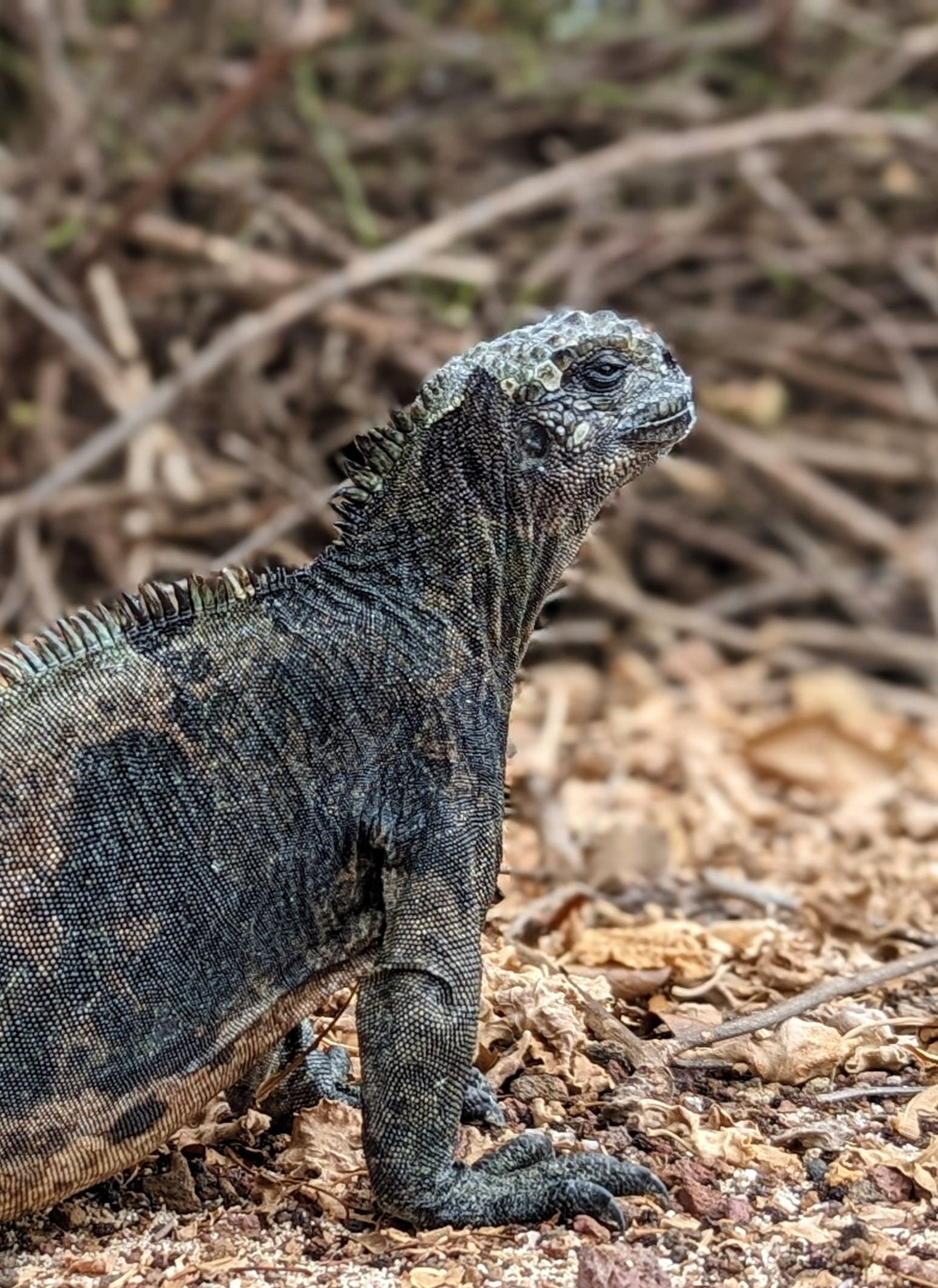
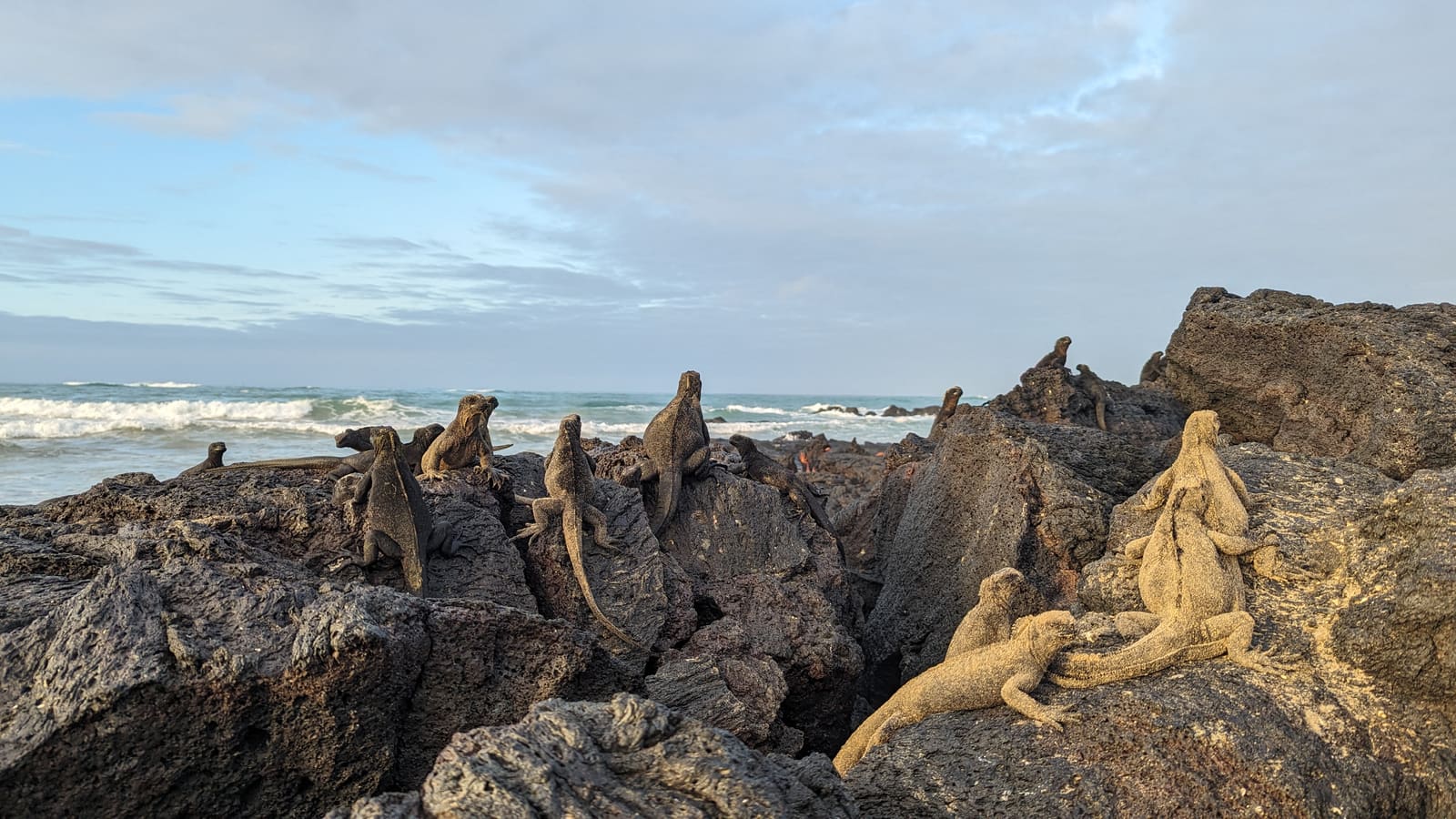
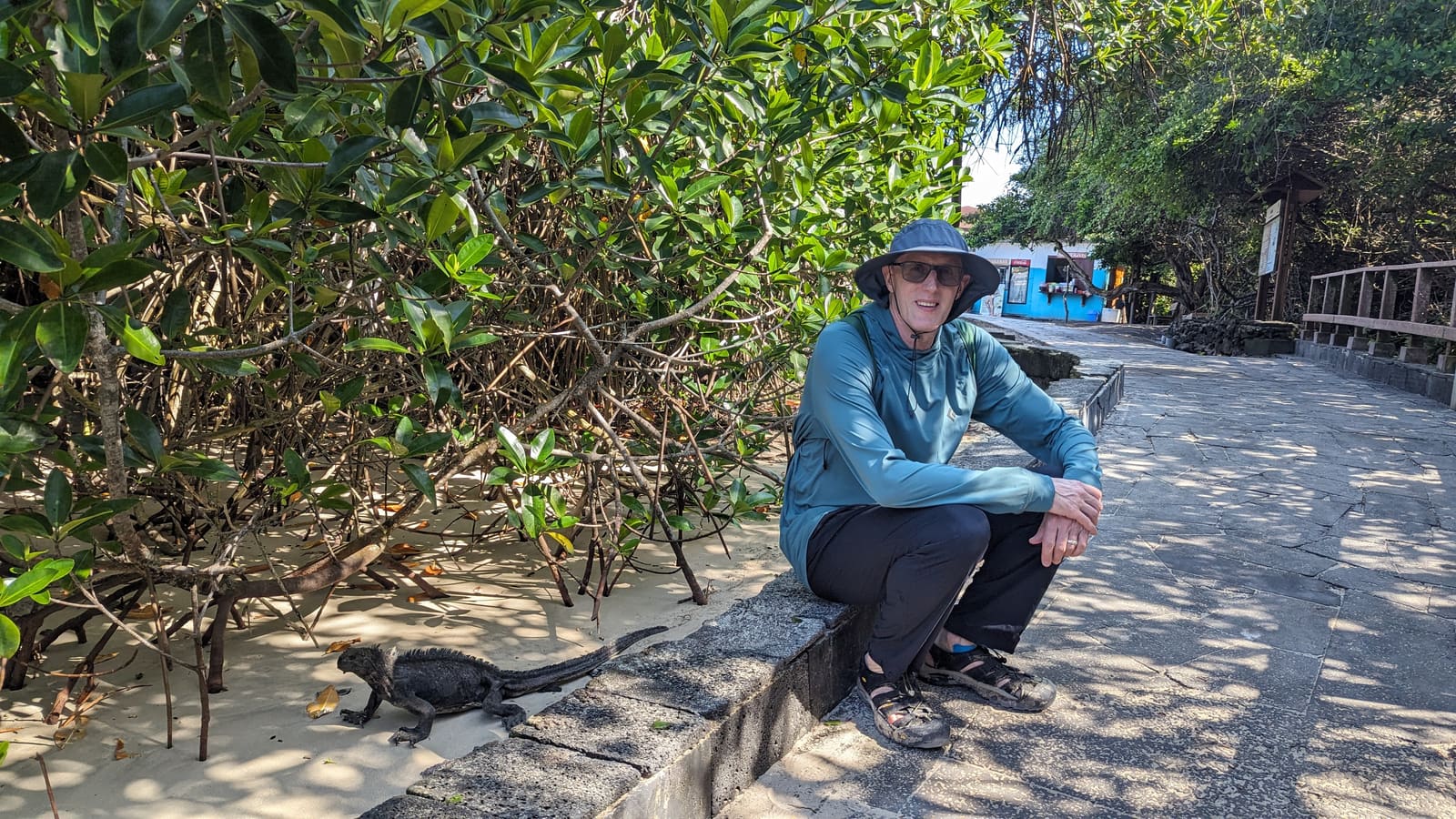
I ran this exact route in May 2024. These are the ferries I queued for, the hotels I paid in cash, and the marine iguanas that ignored me on all three islands. I have spent 25 years learning how to travel well for less in 154 countries. This is that playbook, applied to the destination most people assume requires a cruise ship and a second mortgage.
It does not. Galápagos cruises run $2,000 to $3,000+ per person for a five-to-eight-day berth, before flights and fees. This plan covers the three main inhabited islands in twelve days, land-based, sleeping in real beds, for well under that — and finishes with two days in Cuenca, the loveliest colonial city in Ecuador, which most Galápagos visitors fly straight past. The catch, as always: you do the organising. This page removes most of that work.
Who this trip is for
This is a moving trip with boats in it, and the boats are the honest part. The inter-island ferries are open-ocean speedboat crossings of about two hours, and they get bumpy. If you are prone to seasickness, this plan still works — there is a whole playbook below — but read that section before you commit. Wimps can fly between the islands in small planes instead; it costs more and the views are ridiculous.
Beyond the boats: you should be comfortable walking two to three miles a day, some of it on lava rock and sand, and hauling your own bag on and off water taxis. Nothing requires more fitness than a full day of sightseeing on foot. The equatorial sun is the other opponent; the animals are not, because none of them have read anything about fearing humans.
One honest limit: a land-based trip does not reach the far uninhabited islands. If seeing waved albatross on Española or the iguana swarms of Fernandina is the whole point of your trip, you want a cruise and you should budget accordingly. For everyone else, the three main islands deliver more wildlife at arm’s length than most people can process.
When to go
The Galápagos has two seasons and no bad one. December through May is the warm season: hotter, occasional short downpours, calmer seas, warmer water for snorkeling. June through November is cooler and mistier with choppier crossings, but the Humboldt Current brings the water to life. I went in the second week of May — end of the warm season, seas still reasonable, towns quiet. If rough water worries you, aim for January through April and avoid the June-to-September chop. Christmas and Easter weeks book out and price up; skip them.
The route at a glance
US gateway → Guayaquil (Ecuador) → fly to Baltra/Santa Cruz → ferry to Isabela → ferry back to Santa Cruz → ferry to San Cristóbal → fly to Guayaquil → bus to Cuenca → Guayaquil → home.
The shape is the clever part. You fly into one end of the archipelago (Baltra) and out of the other (San Cristóbal), so no island is visited twice except the unavoidable Santa Cruz hub, and no ferry leg is wasted backtracking. Guayaquil has nonstop flights from several US cities, and the open-jaw island flights cost the same as returns. Book the two island flights with LATAM or Avianca a couple of months out and note the catch: the cheapest fares include only a small under-seat bag (45 x 35 x 20 cm). Pack to that, or pay for the carry-on tier — with the ferries and water taxis in this plan, one small bag is the right answer anyway.
Day by day
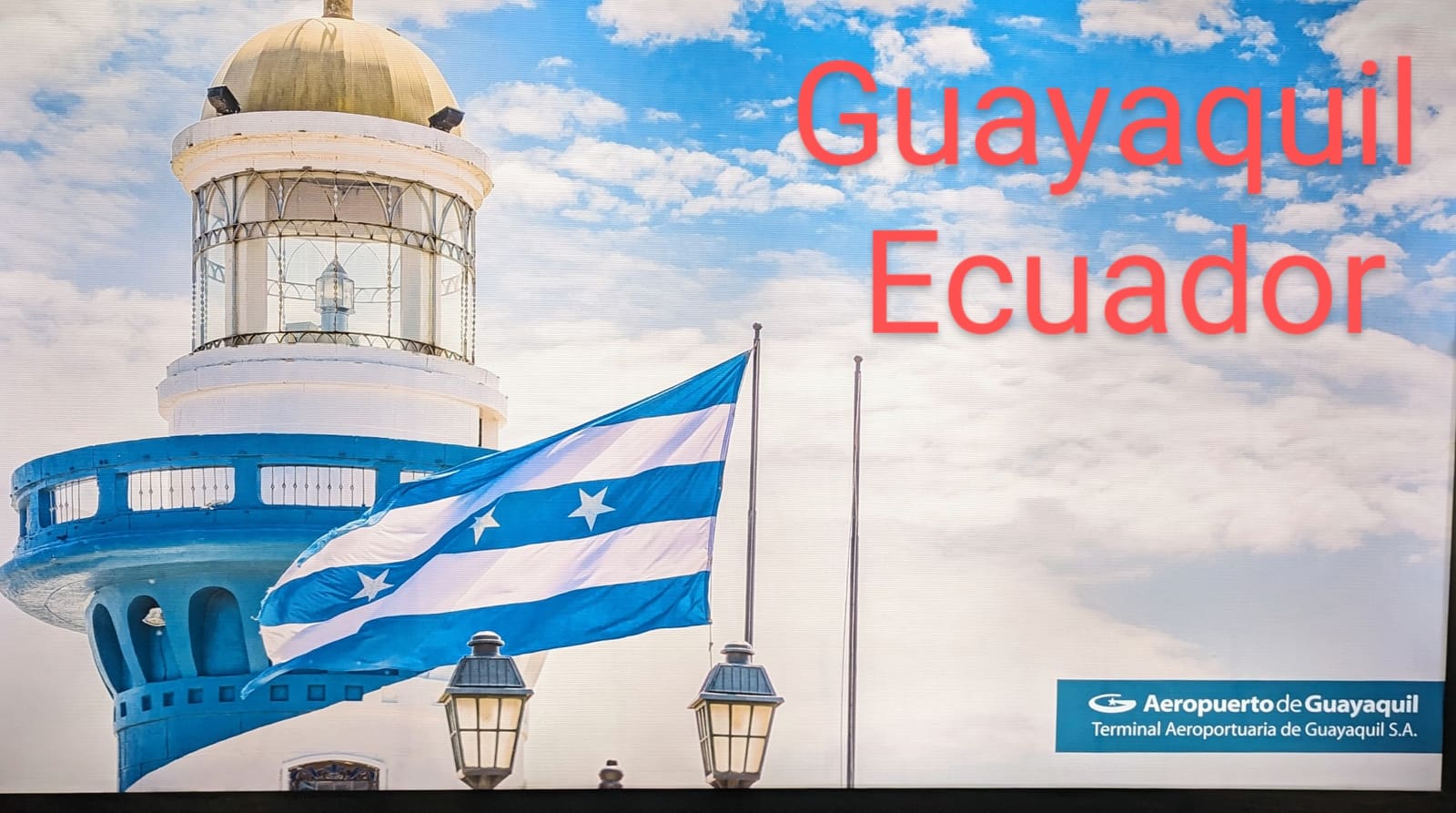
Day 1 - Fly to Guayaquil. Nonstops run from Miami, Houston, and New York. Guayaquil is a transit city, not a destination; stay near the airport and go to bed. We stayed at Dreamkapture Hostel, a budget classic ten minutes from the terminal with private rooms; the Wyndham at Puerto Santa Ana is the comfortable option in the safest riverside pocket of the city. Use official airport taxis or Uber.
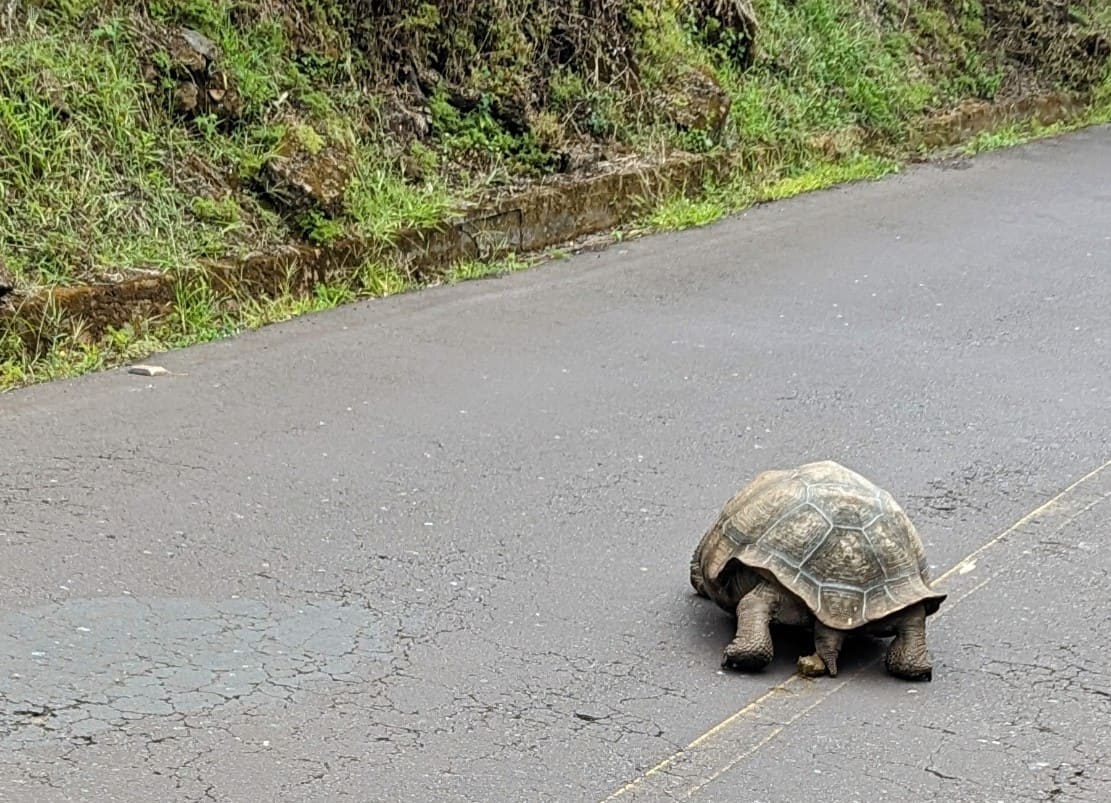
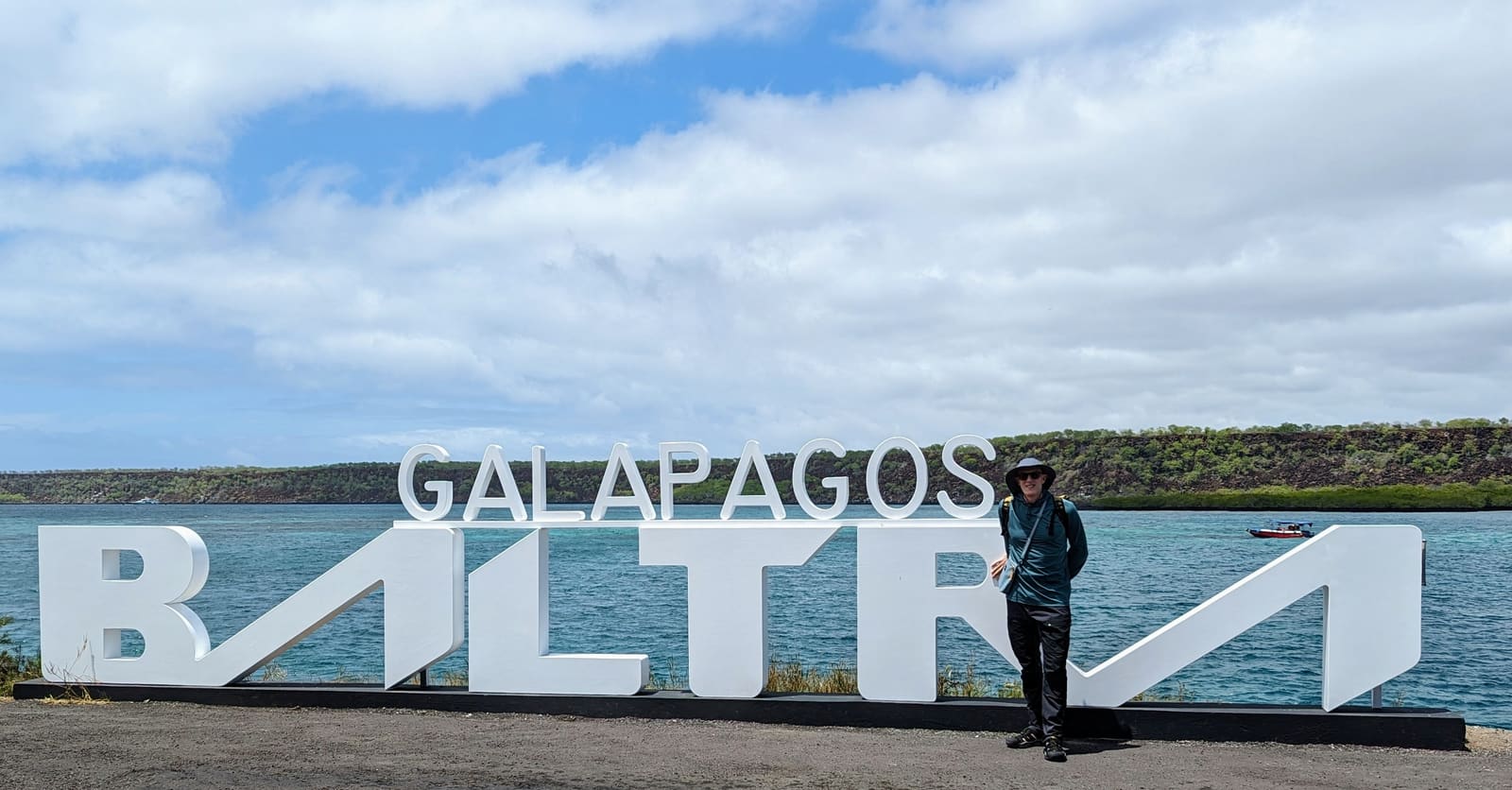
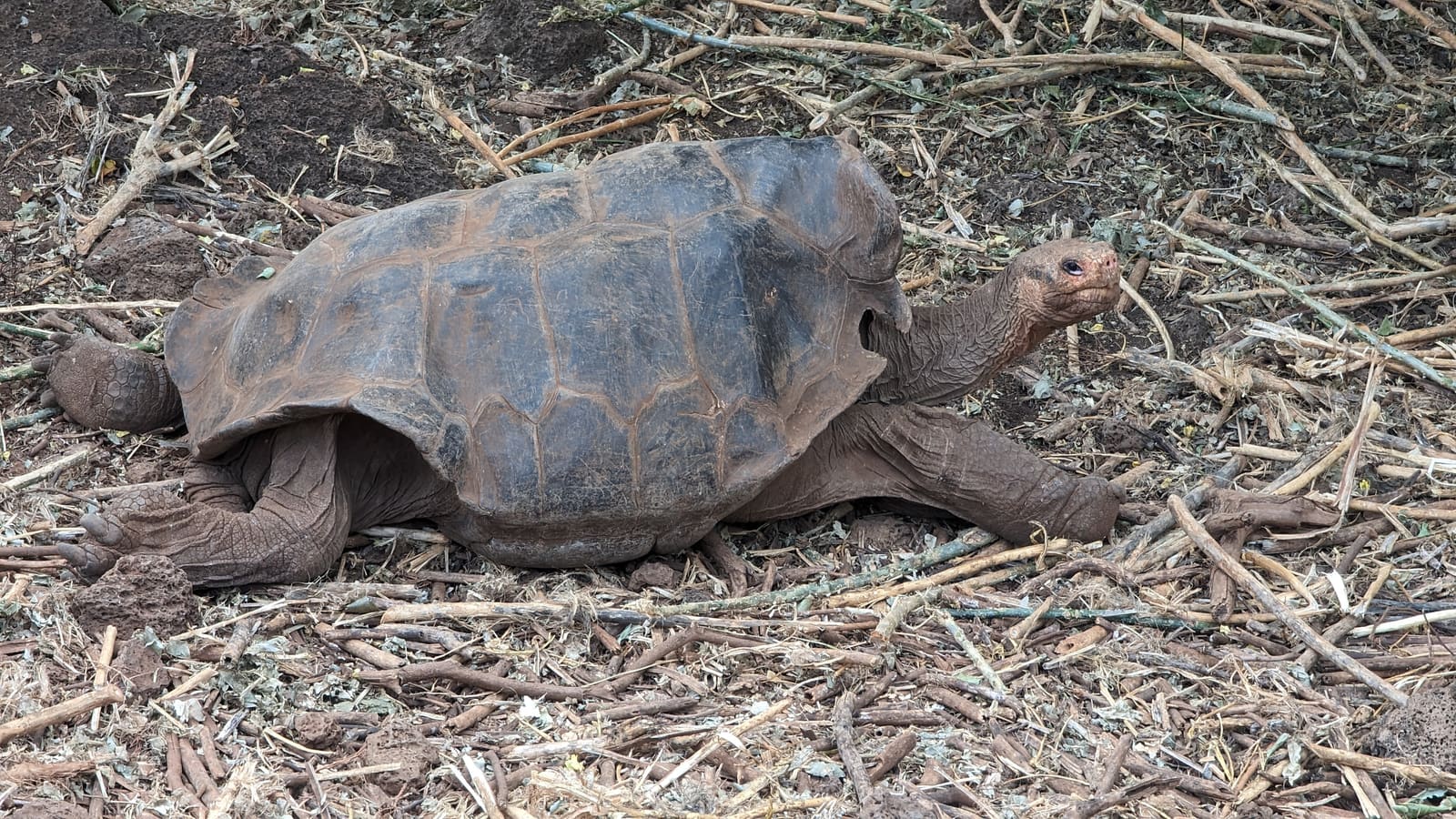
Day 2 - Fly to Baltra, cross to Puerto Ayora. Two hours over the Pacific. Before security at Guayaquil, queue for the $20 Transit Control Card — allow thirty extra minutes. On landing at Baltra, the national park entry fee is $200 per person, cash only, crisp bills (it doubled from $100 in August 2024, and the counters do not take cards). Then the little conveyor of transfers: $5 Lobito bus to the Itabaca Channel, $1 public ferry across, and either the $5 bus or a $25 white pickup taxi 45 minutes over the highlands to Puerto Ayora. Pay the taxi a few dollars more to stop at a highland tortoise ranch on the way — giant tortoises grazing like cattle, and often one parked on the road itself. Afternoon: the Charles Darwin Research Station at the east end of town ($10 guided walk to the tortoise breeding center). We stayed at Hostal Gardner, central and simple — cash only, like most island lodging.
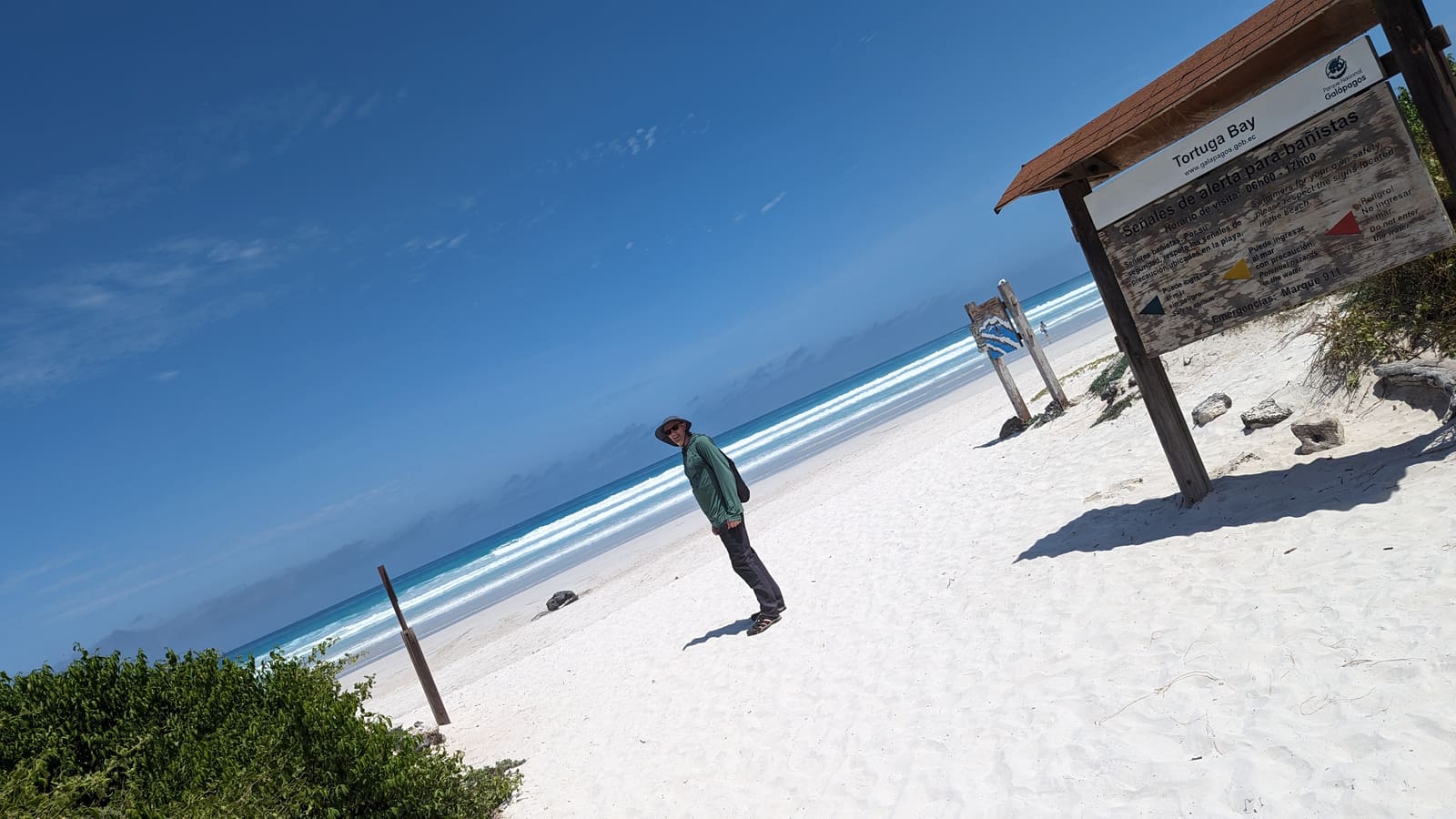
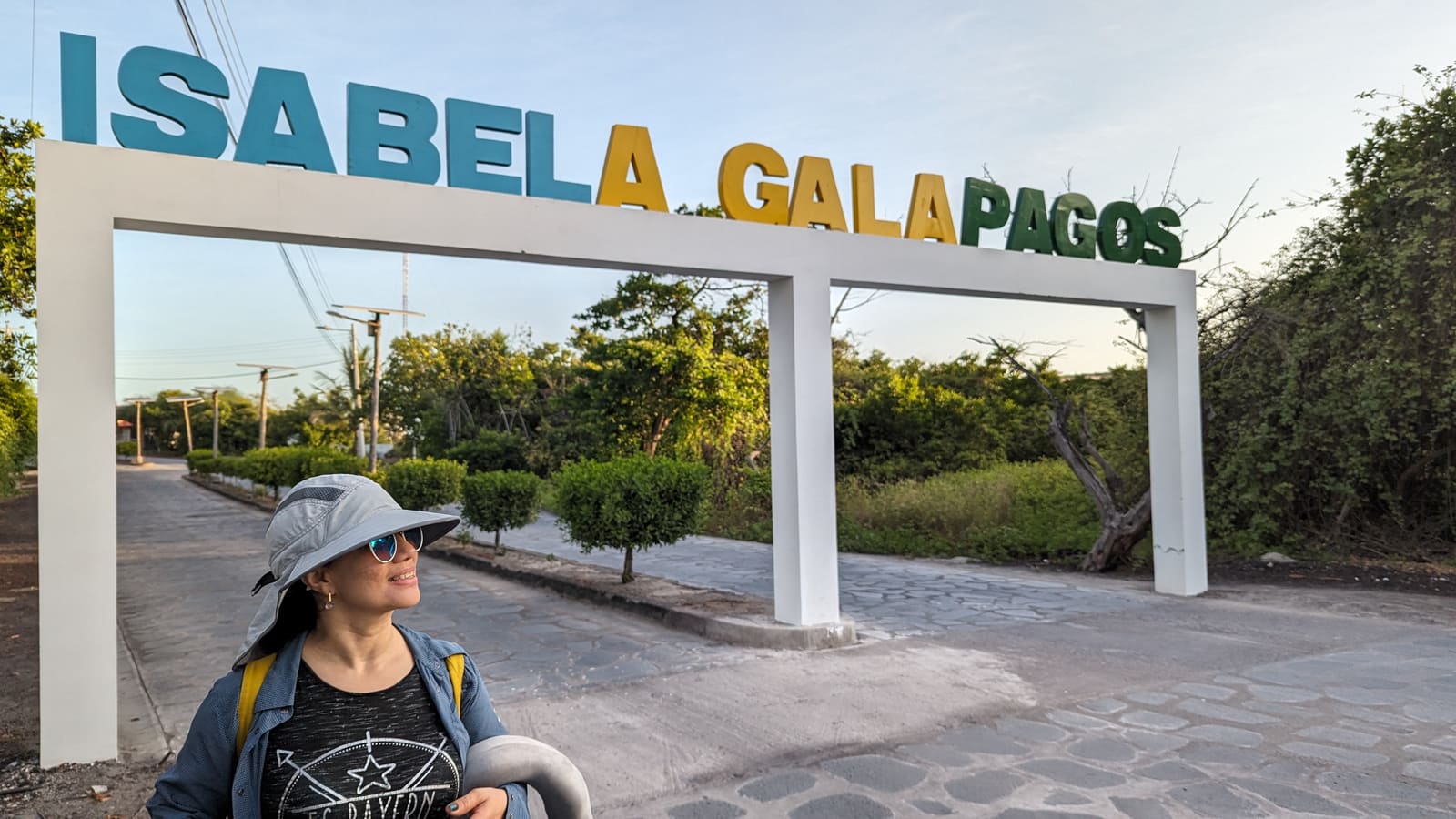
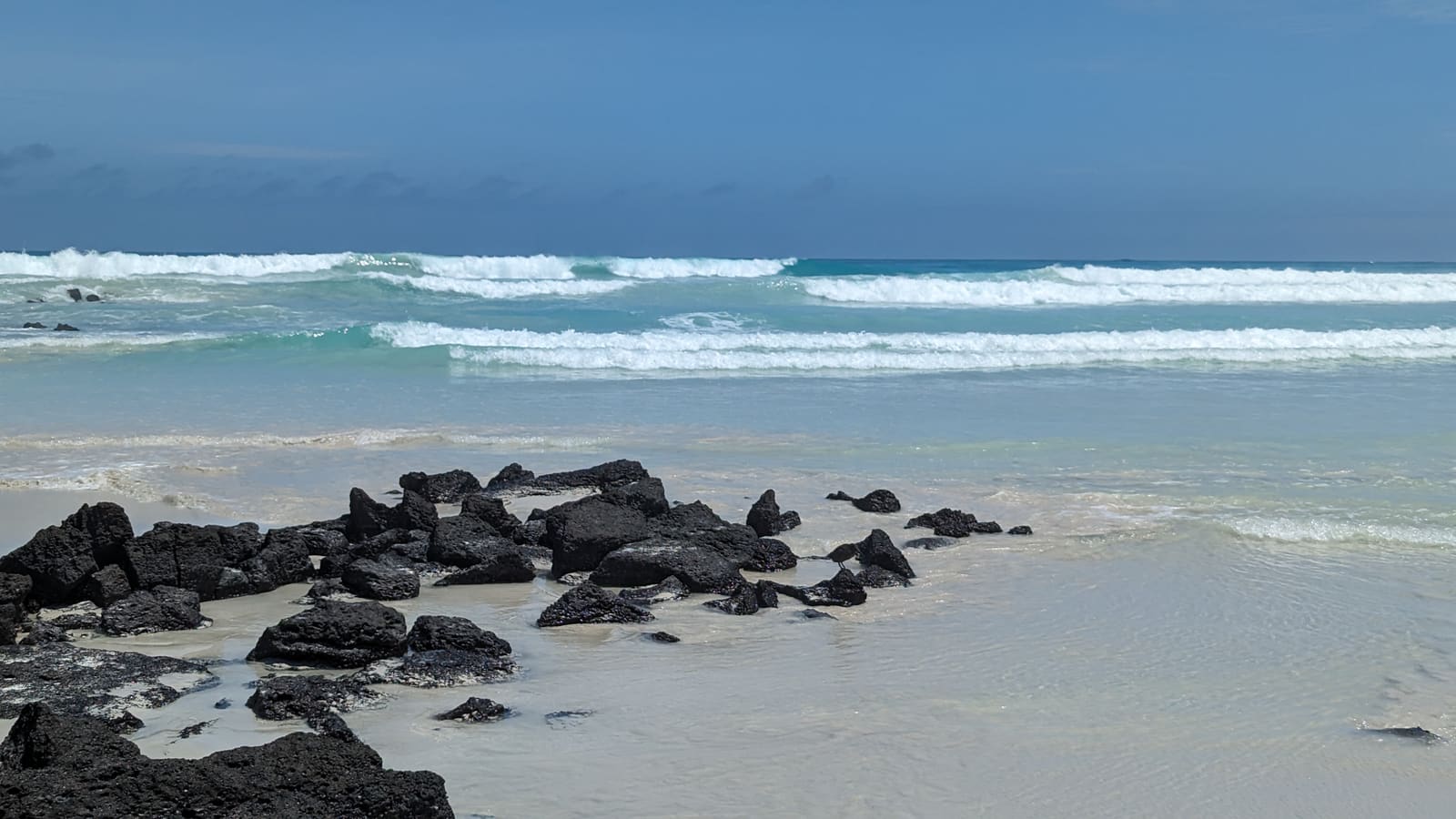
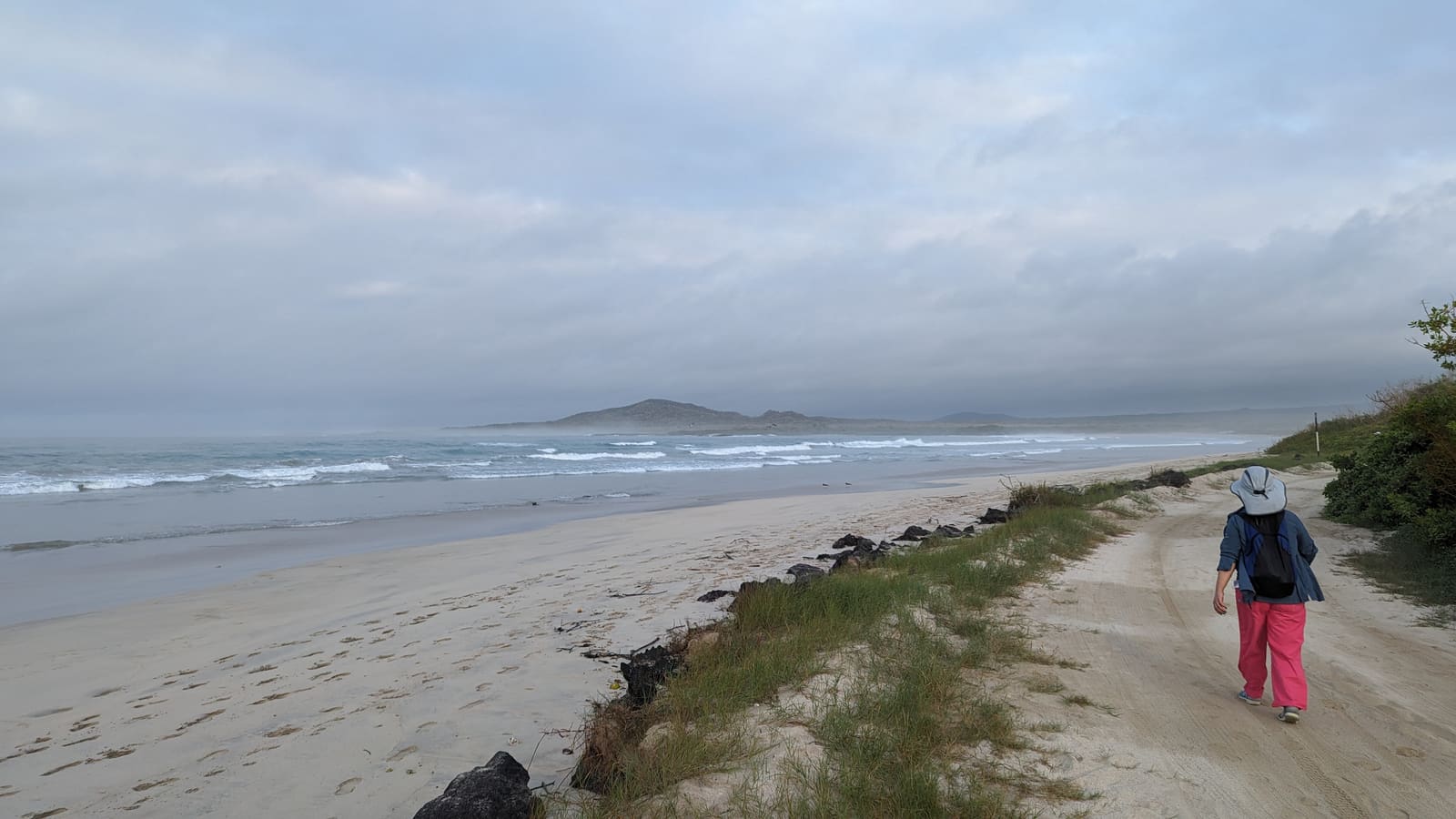
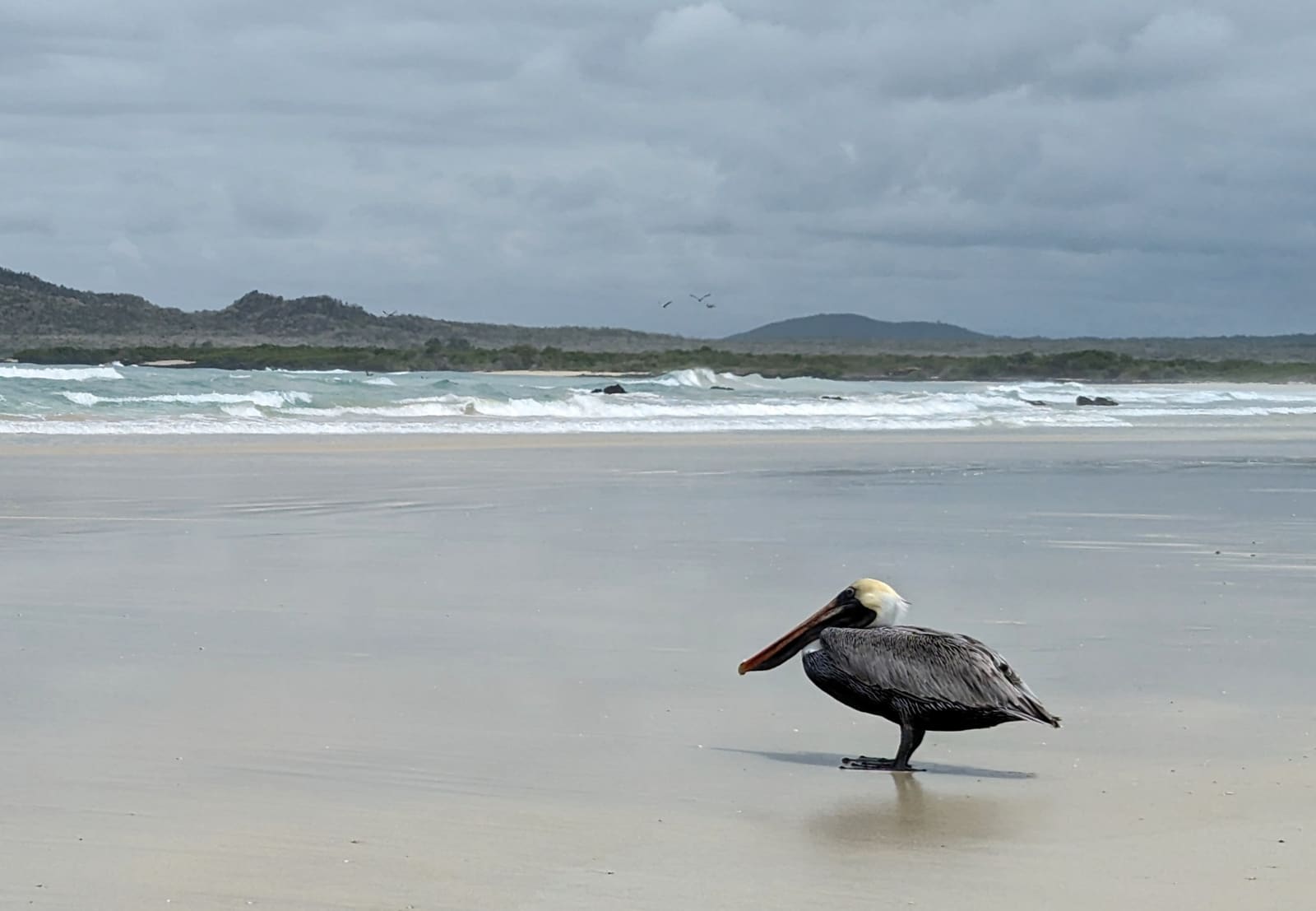
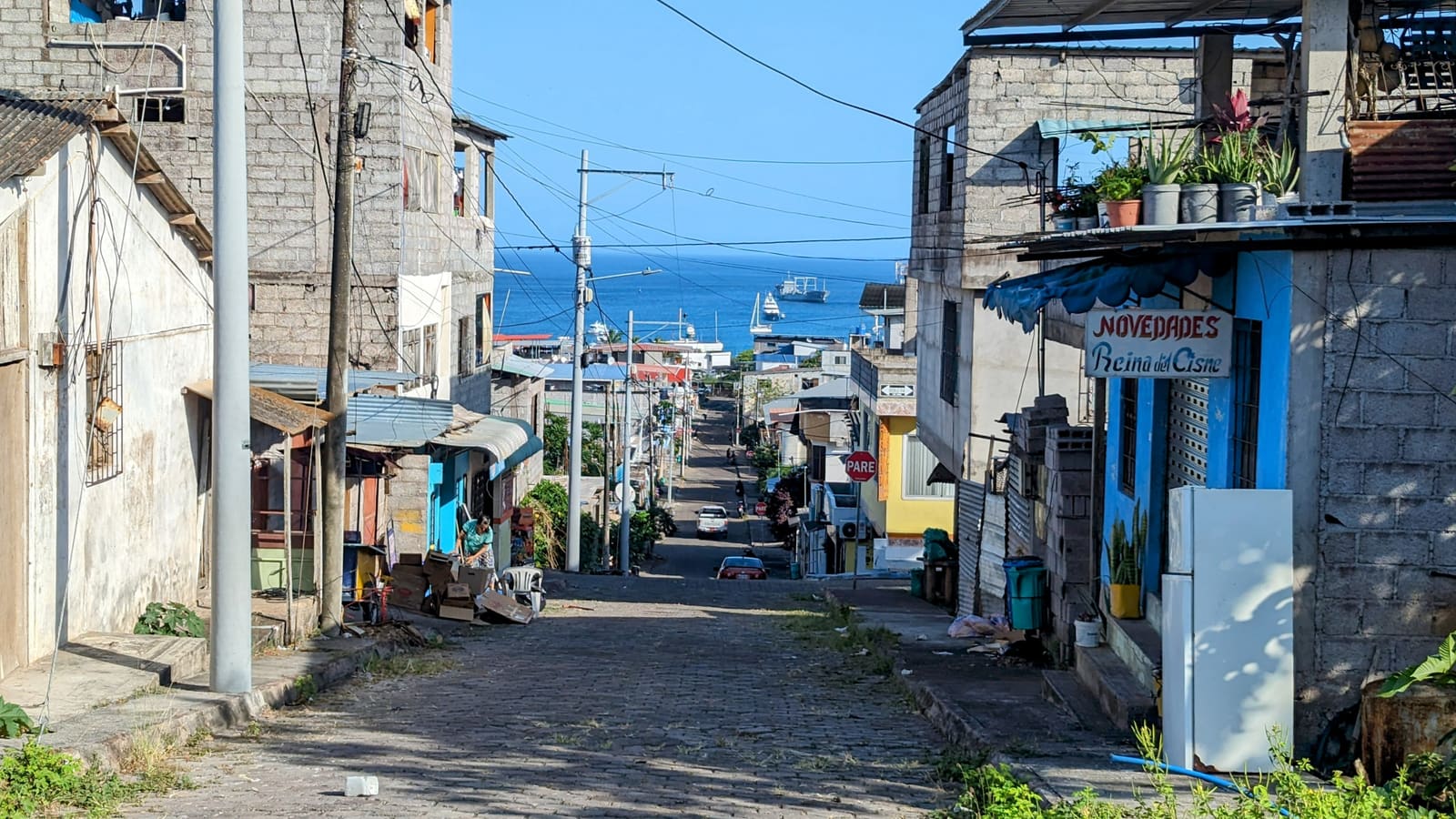
Day 3 - Tortuga Bay, then the 3 PM ferry to Isabela. Sign in at the trailhead and walk the 3 km paved path to Tortuga Bay, the finest beach on Santa Cruz: white sand, surf on one side, a calm swimming cove at the far end, marine iguanas everywhere. Back in town, eat a $5 set lunch (soup, main, juice — the islands’ best-value meal), then report to the pier an hour early for the 15:00 ferry to Isabela ($35, book a day or two ahead — ferrygalapagos.com works, or any storefront agency). Add $1 for the water taxi at each end, $1 harbor tax leaving Santa Cruz, and a $10 municipal fee landing on Isabela. Two hours later you are in Puerto Villamil: sand streets, no ATM queues, the most relaxed town in the archipelago. We stayed four nights at Hostal Punta Arena, quiet, air-conditioned, about $31 a night for a double. Cash.
Day 4 - Sierra Negra volcano. A guide is mandatory (national park rule) and every agency in town runs the same two versions: the Minas de Azufre sulfur-mine tour ($55, more driving, short hikes, 7:30-12:30) or the El Chico hike ($35, more walking, 7:30-13:30). Either way you stand on the rim of one of the largest calderas on earth, ten kilometers across. Book the day before on the main street; take the morning tour and you have the afternoon free for the beach.
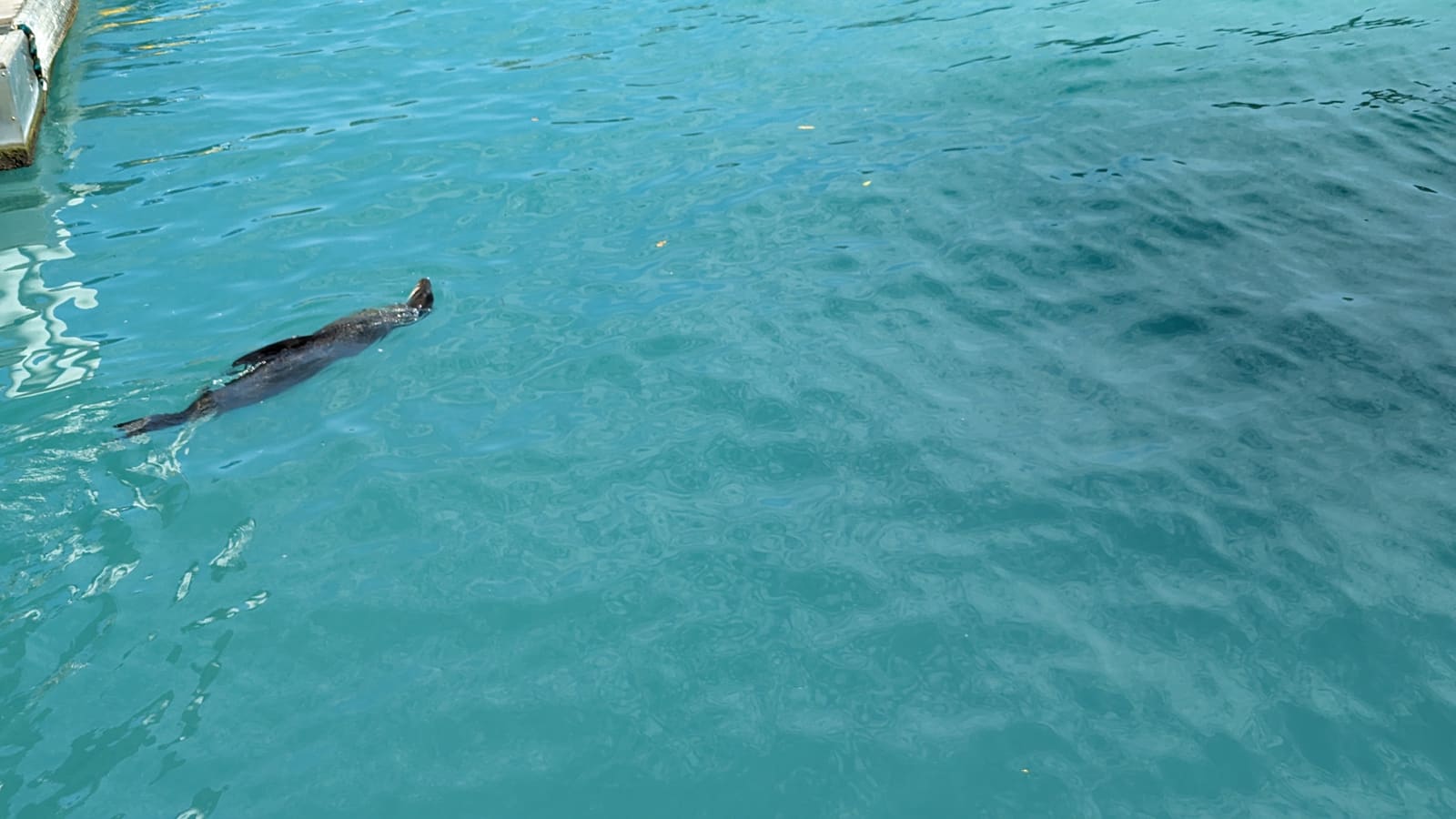
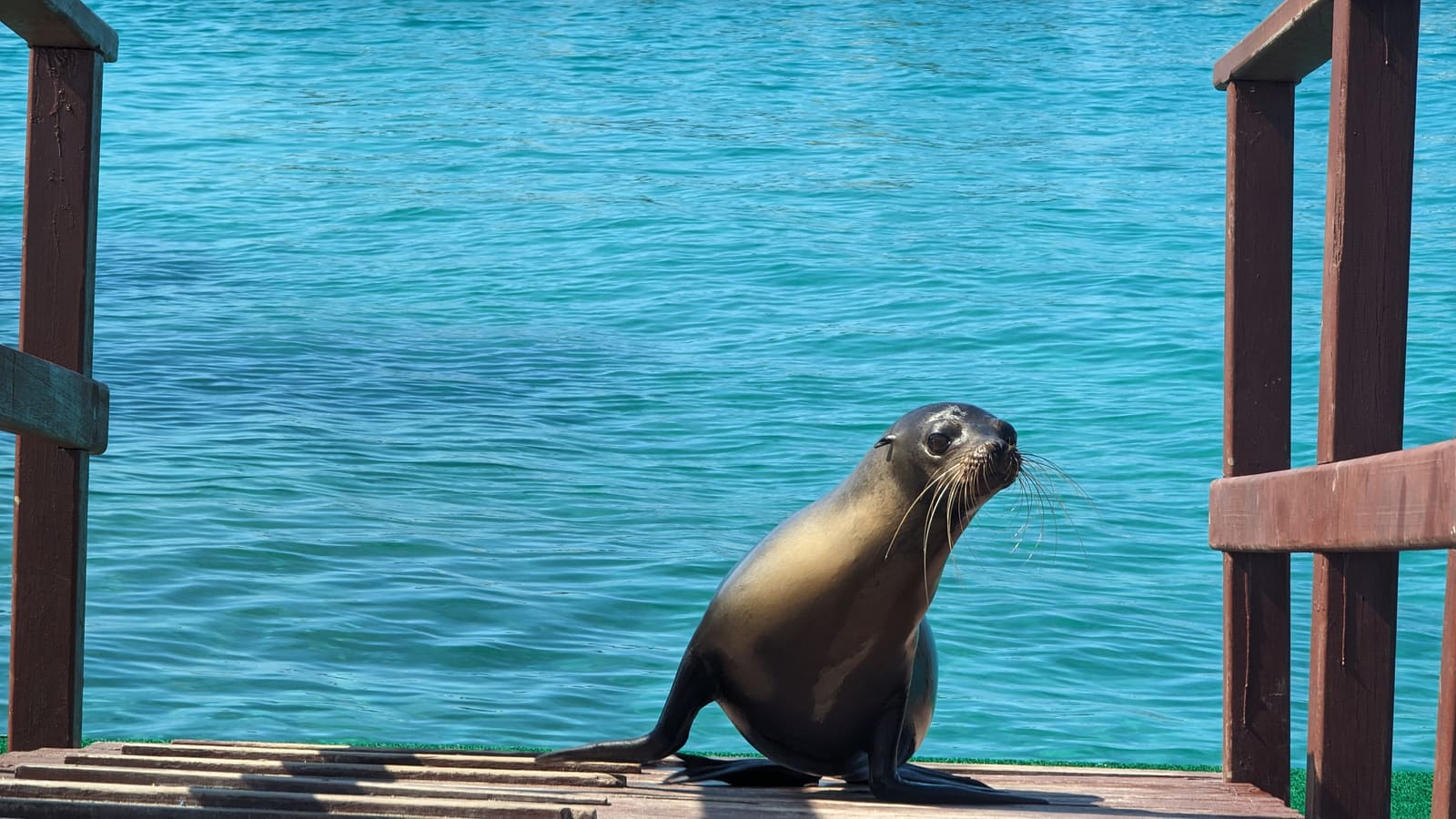
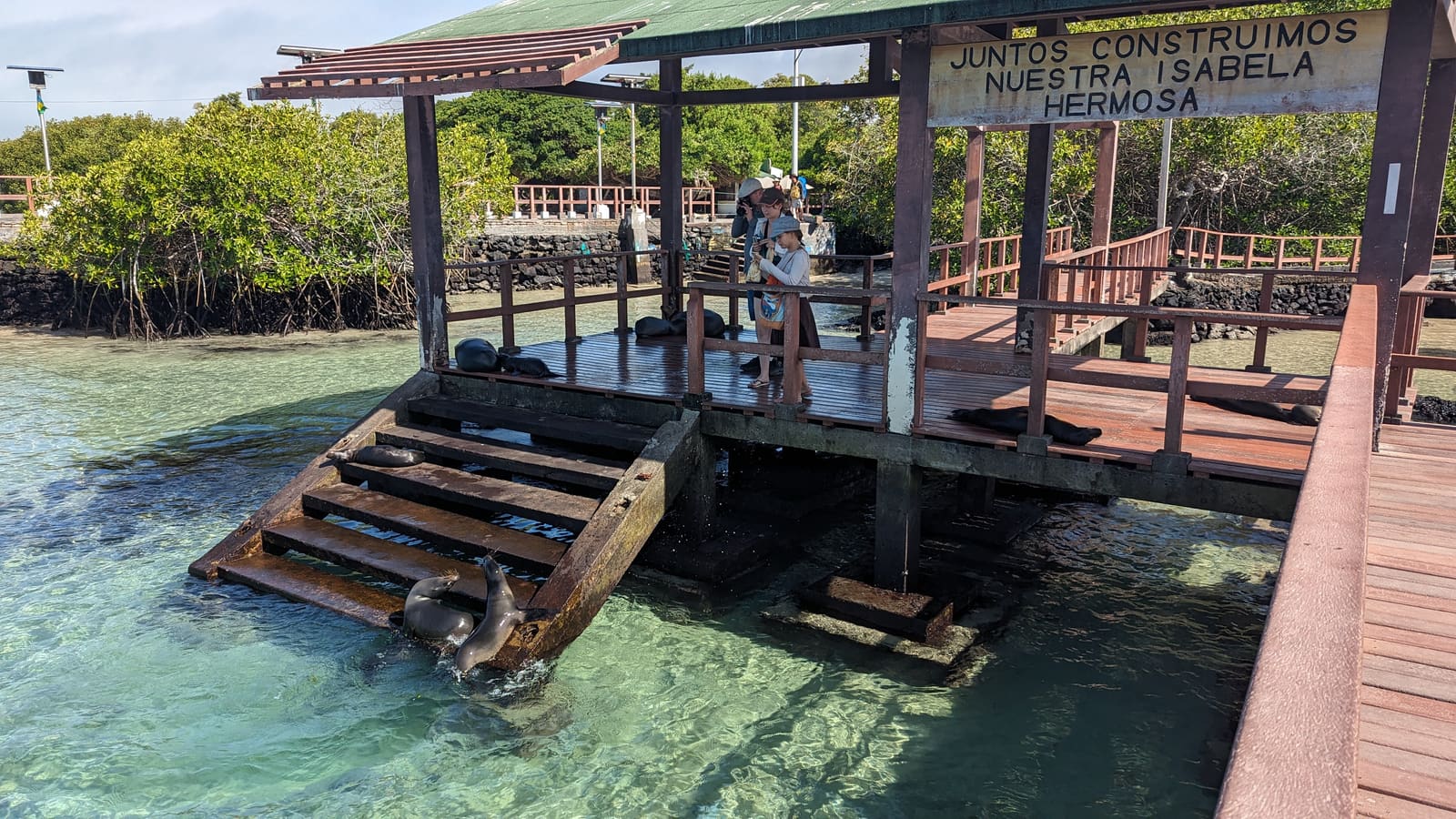
Day 5 - Los Túneles. The best snorkeling tour of the trip and the one thing on Isabela worth its price ($100-125; Pafecomar quoted the fairest rate when I asked around, others wanted $125+). Lava arches in turquoise water: green turtles, seahorses, whitetip reef sharks, and blue-footed boobies nesting an arm’s length from the trail. Book two days ahead by WhatsApp. Cheaper alternative or add-on: the Tintoreras islet tour ($45-60), penguins included. Afternoon: walk the boardwalk to Concha de Perla and snorkel the mangrove lagoon for free, past the sea lions asleep on the dock.
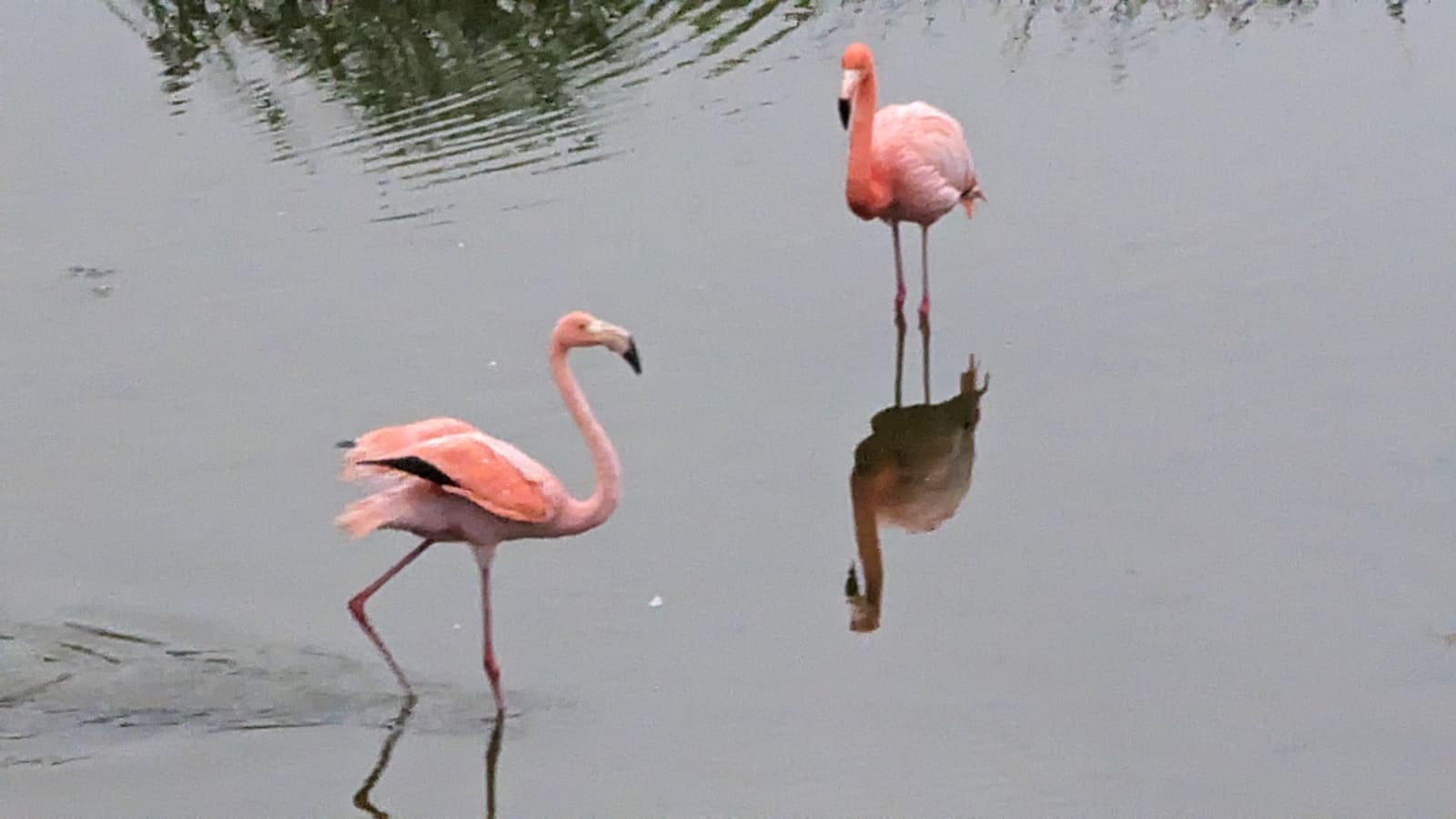
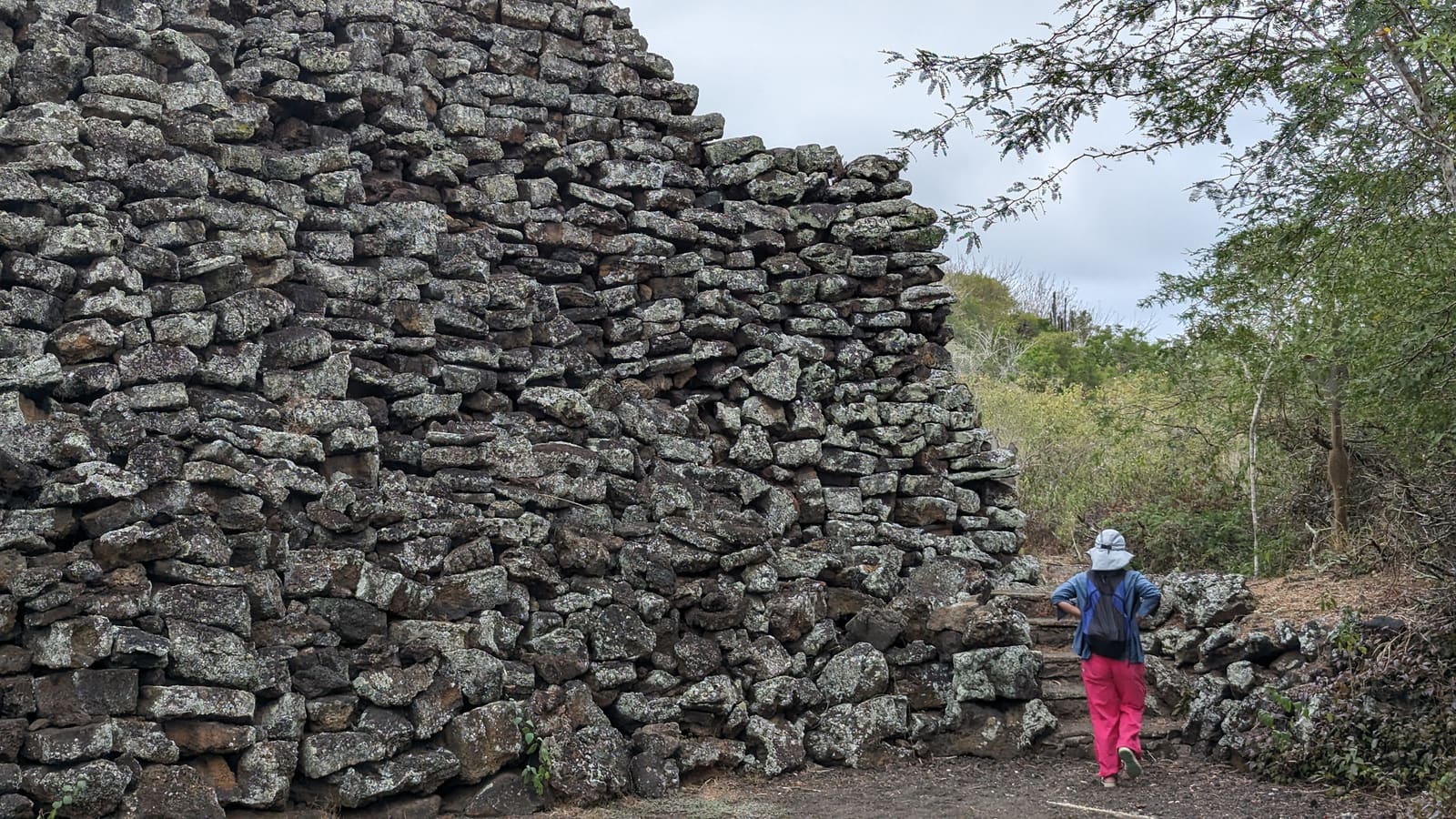
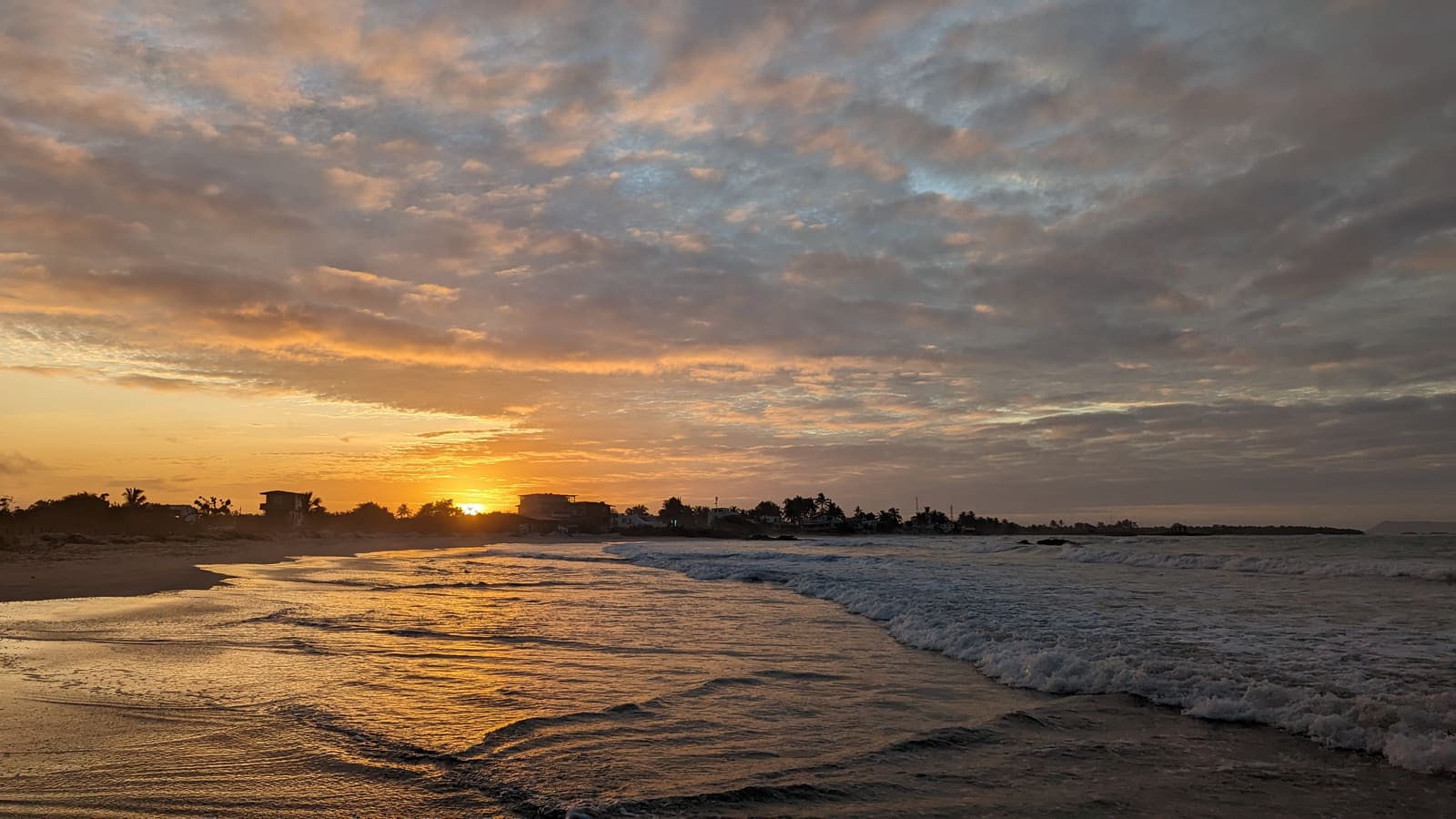
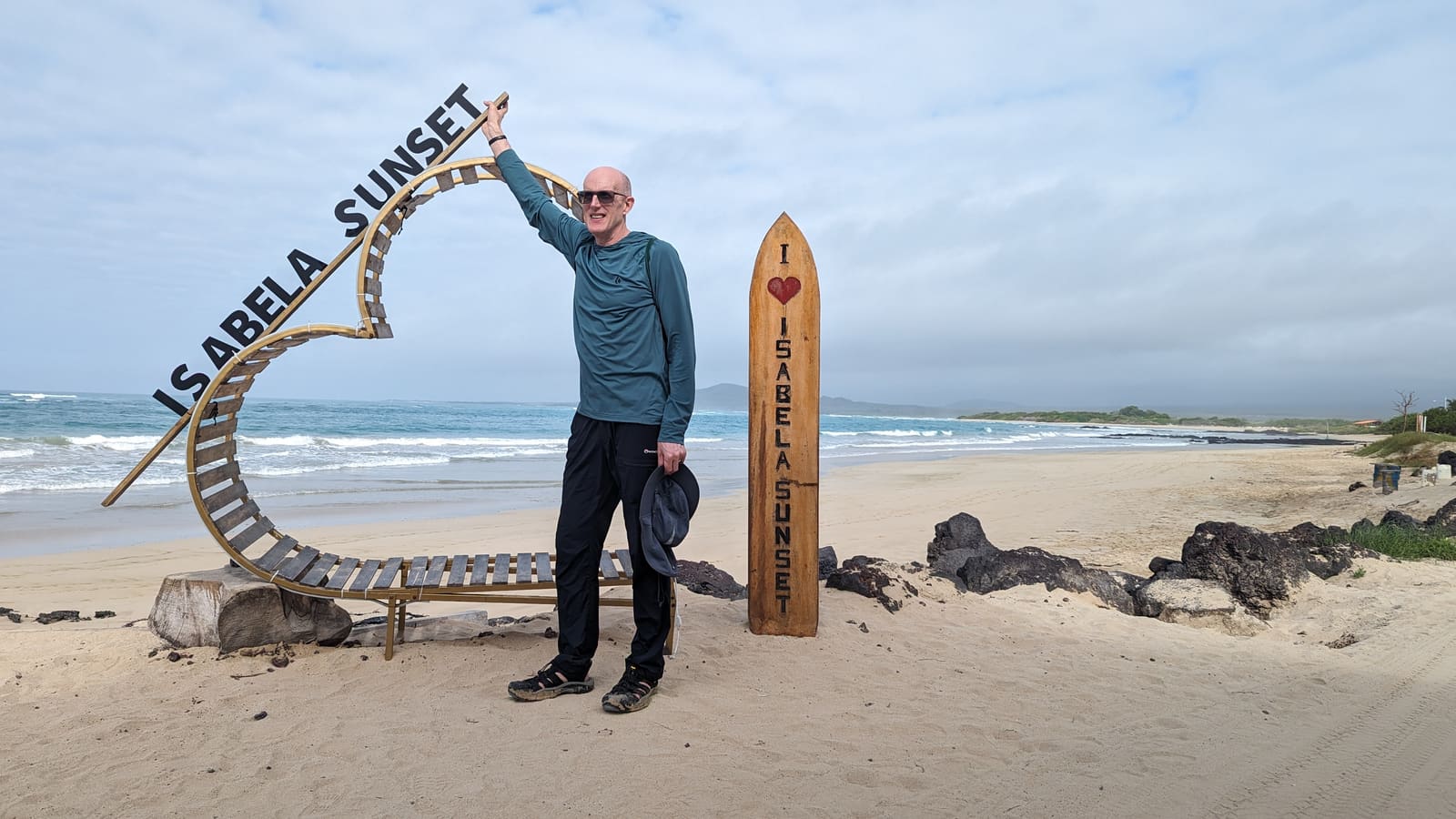
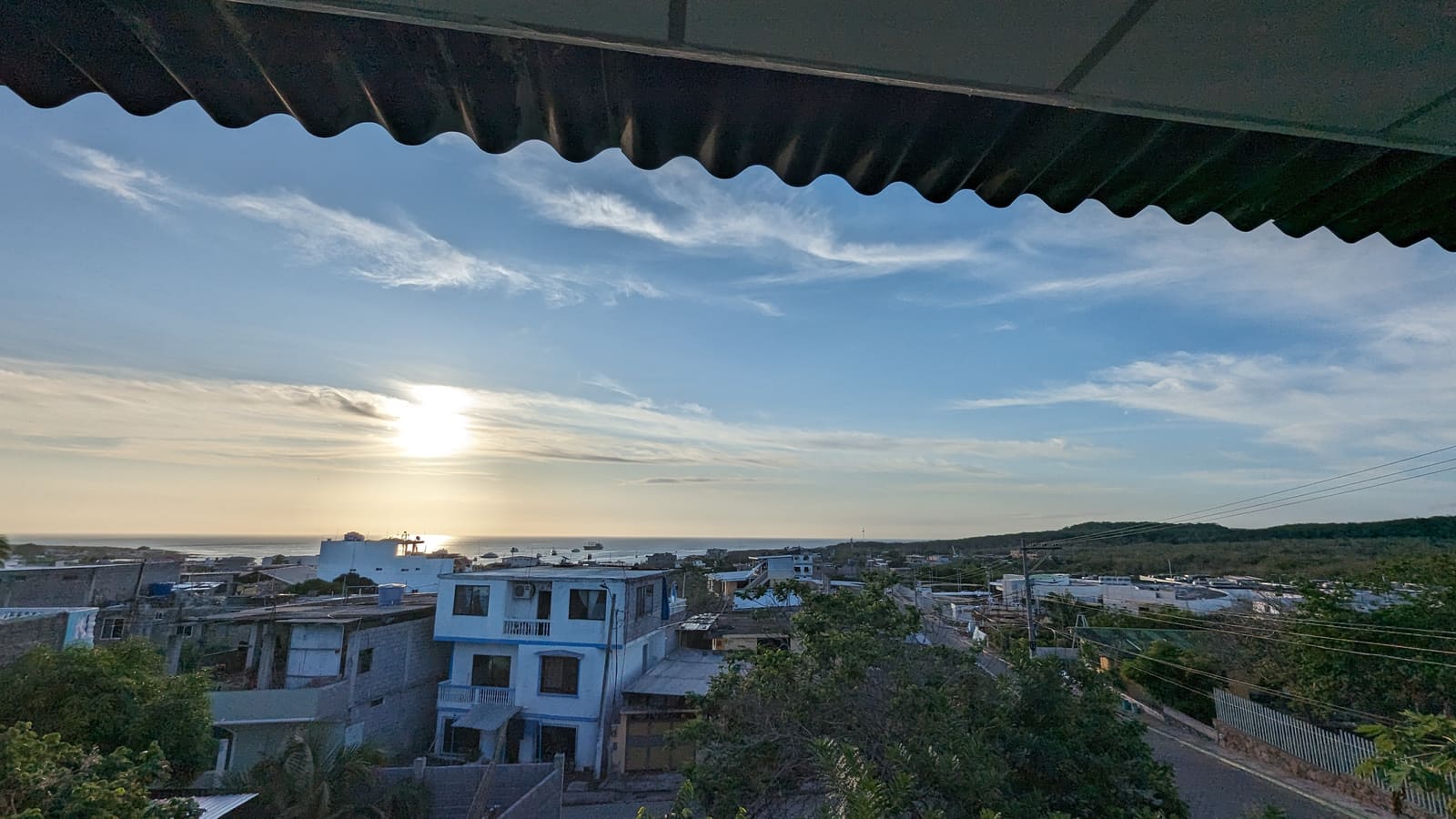
Day 6 - Bike the Wall of Tears road. Rent a bike ($10 half day, $15 full) and ride the 7 km coastal track west past beaches, wetlands, and a flamingo lagoon to El Muro de las Lágrimas, the wall political prisoners built and hated in the 1950s. It is one of the few sites in the park you may visit without a guide, and the ride — marine iguanas across the path, empty coves — is the point. On the way back, the giant tortoise breeding center ($10, guided) is a worthwhile stop. Sunset from the beach bars on the west end of town; the 2-for-1 cocktail hour at Isabela Sunset bar is a Puerto Villamil institution.
Day 7 - Ferry back to Santa Cruz. Walk out at dawn to the lagoon behind town for the flamingos, then a free morning — the beach runs three kilometers and rarely holds ten people. The 15:00 ferry returns you to Puerto Ayora; overnight there again. Souvenir evening: the harbor promenade, the fish market with its queue of pelicans and sea lions, and an ice cream on the way home.
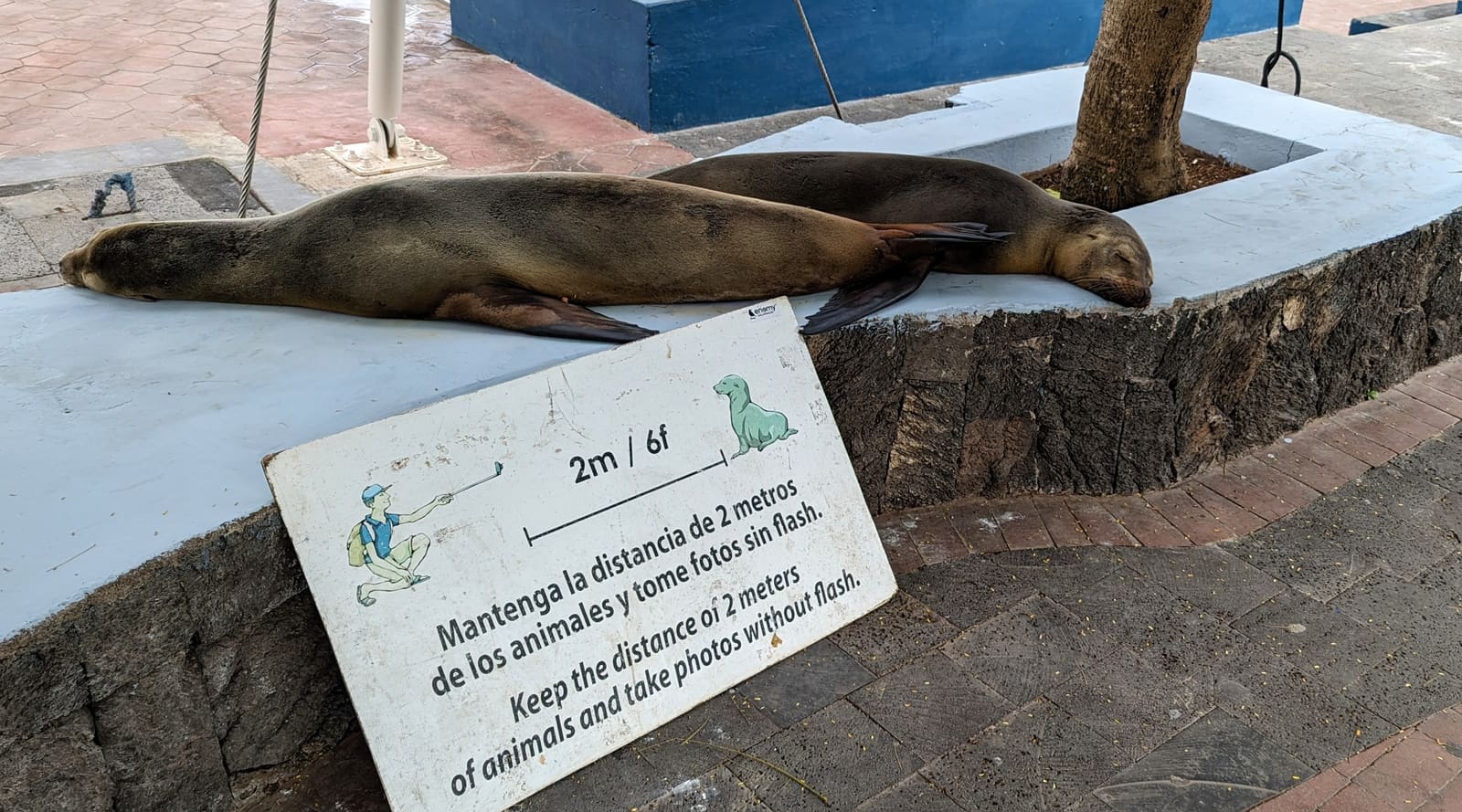
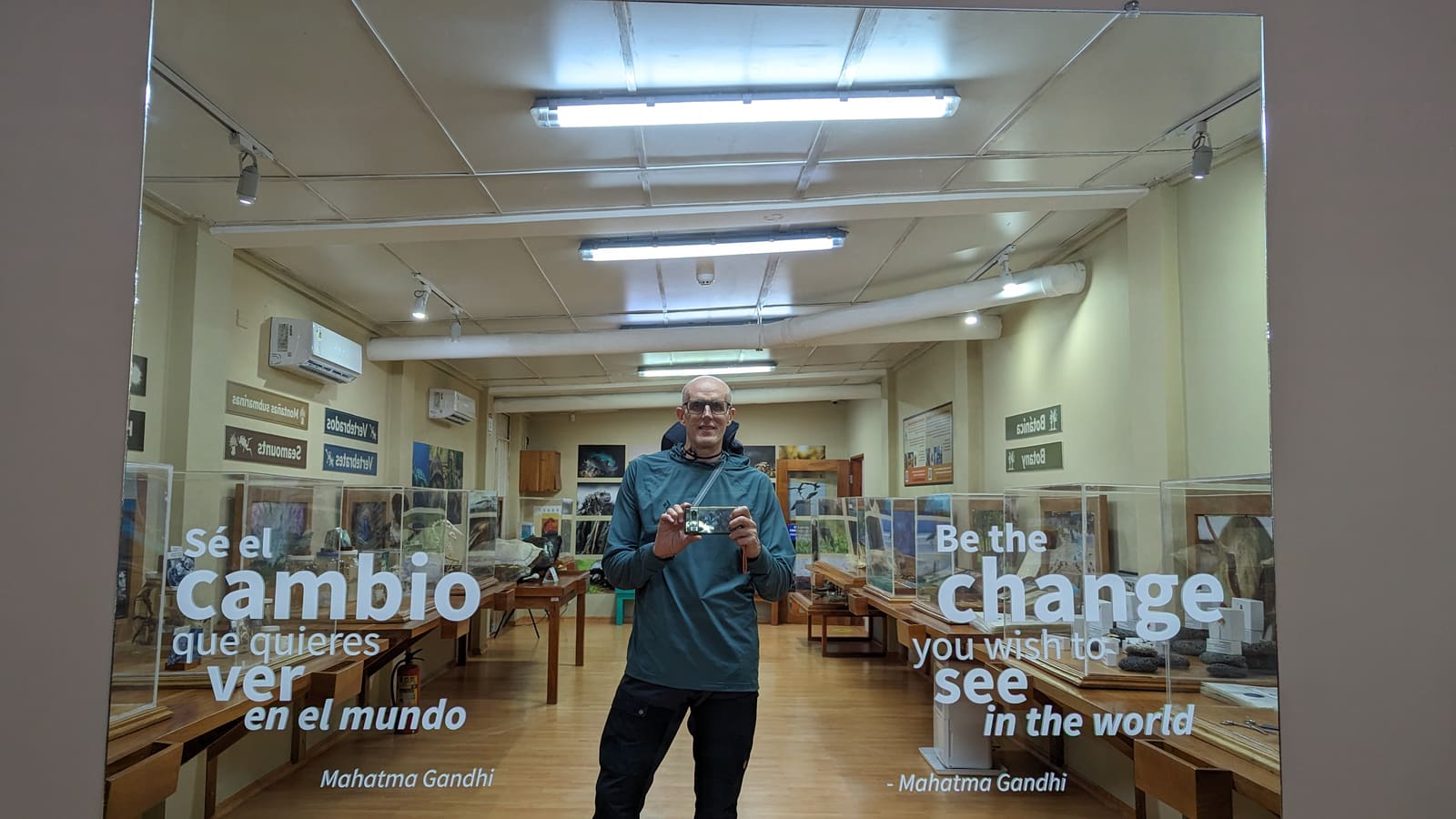
Day 8 - The 7 AM ferry to San Cristóbal. Earplugs in, pill down, back-row seat. By mid-morning you are in Puerto Baquerizo Moreno, the sleepy capital, where sea lions own every bench, dinghy, and stretch of sand they can reach. Do the free Interpretation Center — the best telling of the islands’ strange human history — then follow the Cerro Tijeretas trail to the lookout over Kicker Rock and snorkel the protected cove below it. Sunset with the sea lion colony at Playa Punta Carola. We stayed at Hostal La Posada de José Carlos, about $39 a night.
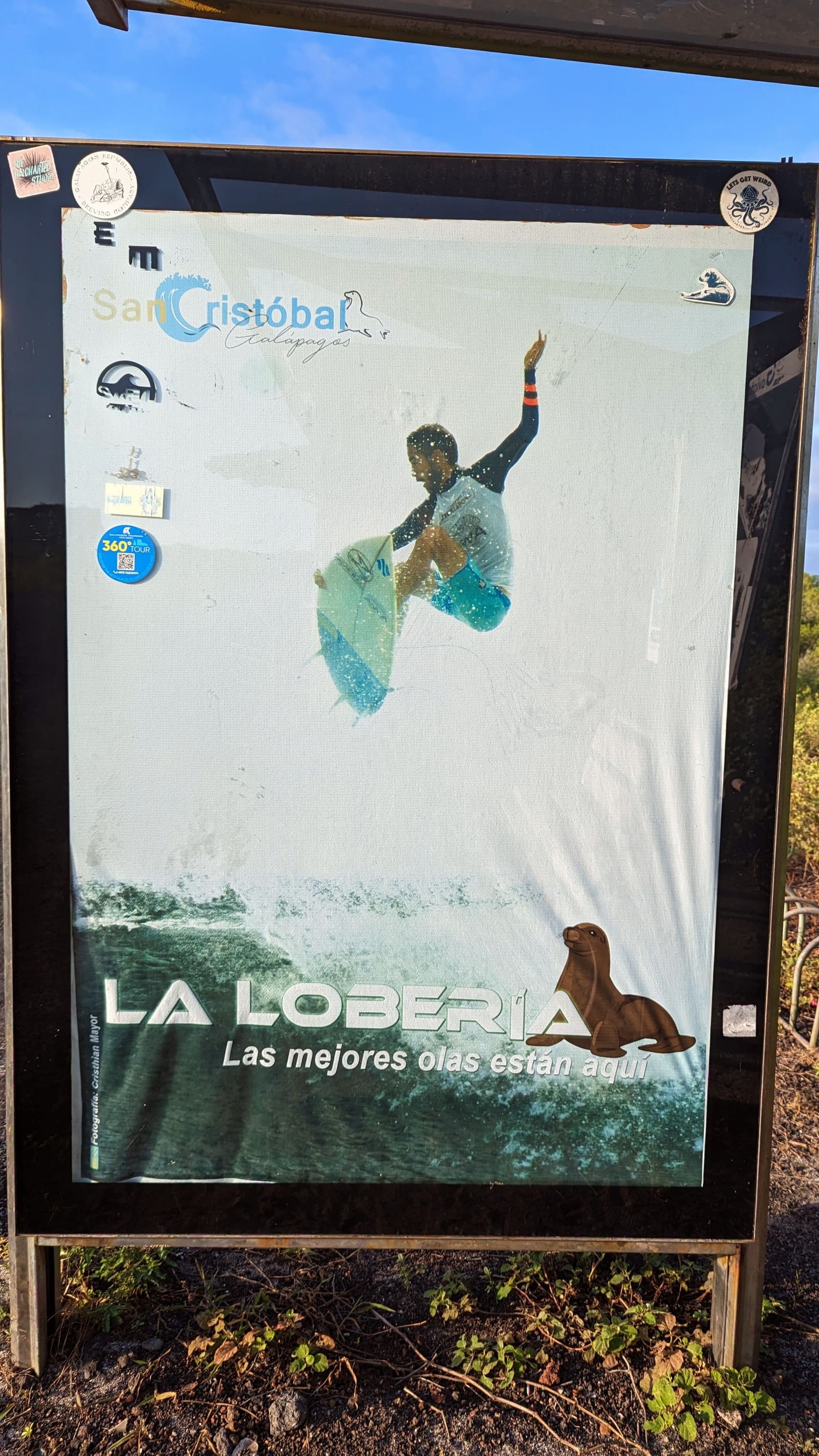
Day 9 - The choice day. Option one: the 360° boat tour around the island ($140 with Pelican Tours when others quoted $180+), which circles San Cristóbal and snorkels Kicker Rock — the deep-water wall where hammerheads cruise below you. Ask for the counter-clockwise routing so the afternoon leg runs the calm north shore. Option two, free and superb: walk to La Lobería beach for the sea lions and surf, and spend the afternoon on the town beaches. Either way, dinner is a $6 encebollado or $3 shrimp skewers at Picantería Sarita — San Cristóbal eats better and cheaper than anywhere else on the route.
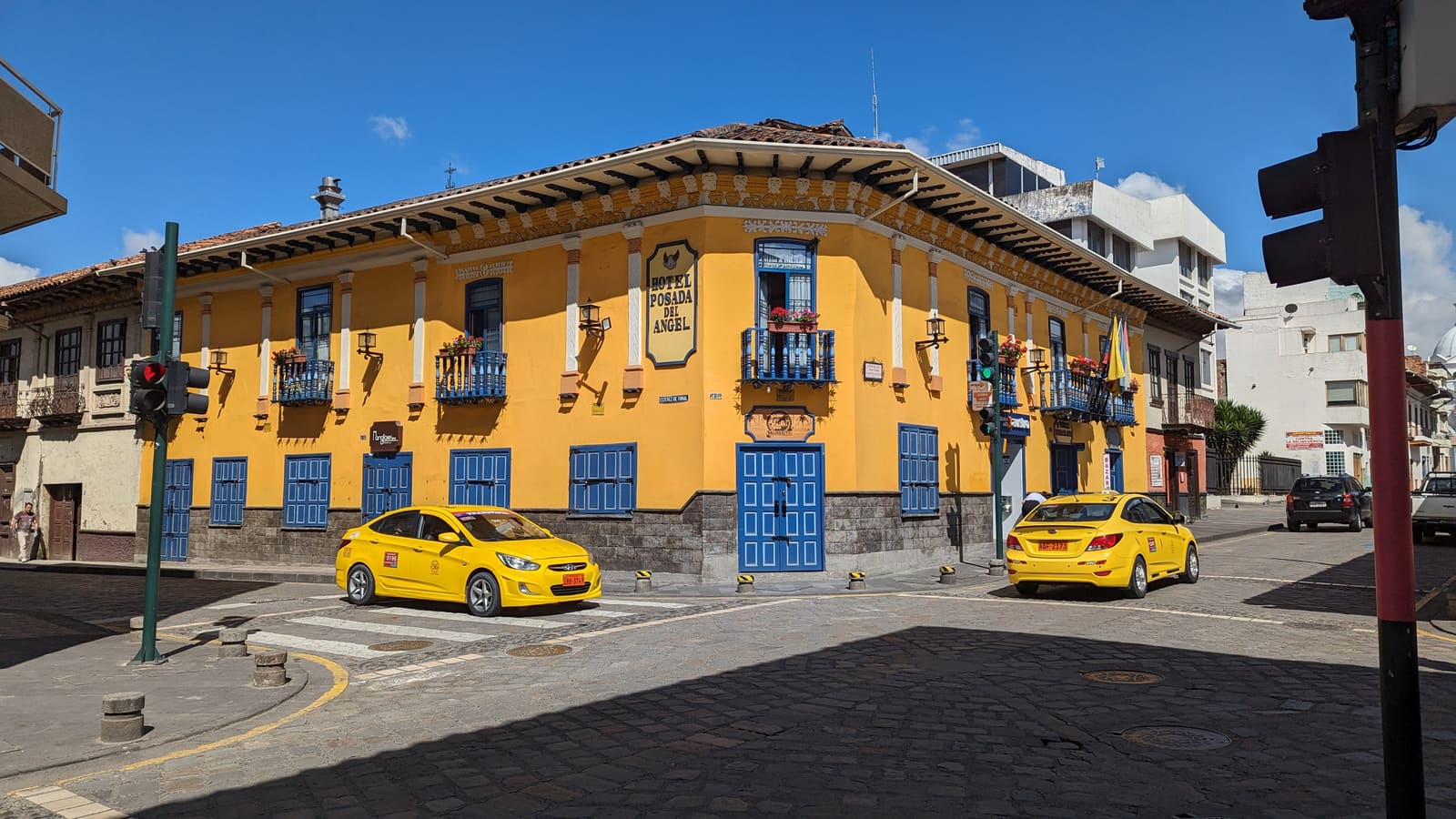
Day 10 - Fly to Guayaquil, bus to Cuenca. San Cristóbal’s airport is a ten-minute walk from town — have a bakery breakfast at Kachi Tanta, stroll to your gate. The late-morning LATAM flight lands in Guayaquil after lunch; from the adjacent bus terminal, comfortable coaches climb to Cuenca in about four hours ($10-12) through Cajas National Park. At 2,500 m, Cuenca is suddenly cool, quiet, and colonial — pack a sweater and drink water; you will feel the altitude the first evening. We stayed at Guillerminas Hostel Boutique, a friendly little place on Benigno Malo in the middle of the historic grid, about $33 a night for a double — proof that Cuenca is the cheapest fine city you will ever sleep in.
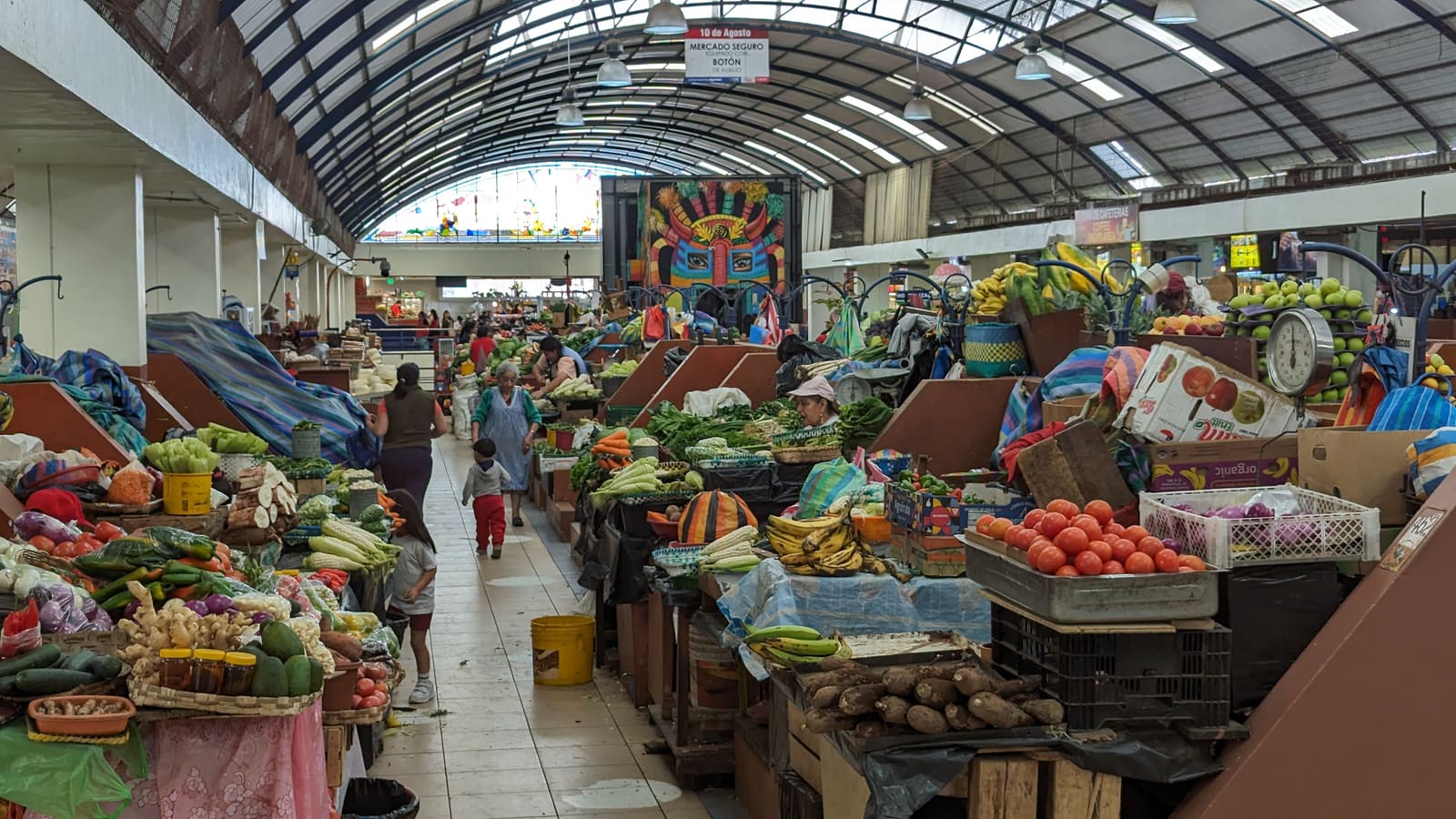
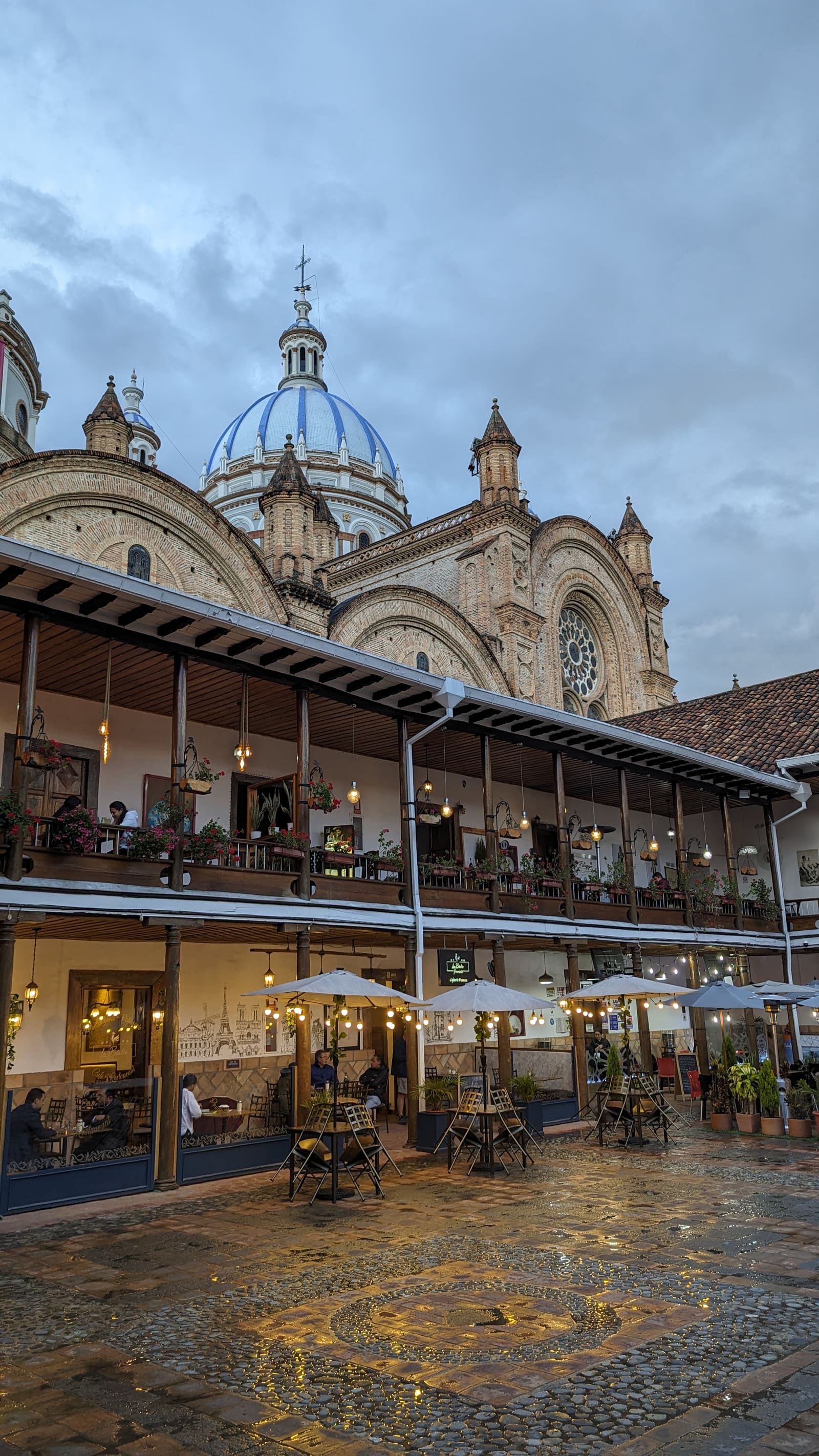
Days 11 - Cuenca. The historic center is a UNESCO site you can cover on foot: the blue domes of the New Cathedral, the flower market, the 10 de Agosto market hall (eat where the queues are), and the Panama hat museum — the hats were always Ecuadorian, and Cuenca is their true home. This is the decompression day every Galápagos itinerary should have and almost none do.
Day 12 - Back to Guayaquil, fly home. Morning bus down from the mountains, evening flight out of Guayaquil. If your flight leaves early instead, do Cuenca as days 10-11 and overnight the last night near the Guayaquil airport.
Where we stayed
All couple-friendly with private rooms, chosen for location and value. Bring cash for all of them except Guayaquil.
| Stop | Nights | Hotel |
|---|---|---|
| Guayaquil | 1 | Dreamkapture Hostel (or the Wyndham Puerto Santa Ana for comfort) |
| Puerto Ayora, Santa Cruz | 1 | Hostal Gardner (cash only) |
| Puerto Villamil, Isabela | 4 | Hostal Punta Arena (cash only, breakfast $6) |
| Puerto Ayora, Santa Cruz | 1 | Hostal Gardner again |
| Puerto Baquerizo Moreno, San Cristóbal | 2 | Hostal La Posada de José Carlos |
| Cuenca | 2 | Guillerminas Hostel Boutique (historic center, about $33 for a double with shared bath) |
Free-cancellation rates weeks ahead, reconfirm a few days out — the same booking rhythm as every plan on this site. Island hotels are small; in high season book the Isabela nights first.
What it costs
Per person, double occupancy, from my May 2024 run — updated where the rules have since changed (the park fee doubled in August 2024).
| Item | Per person (USD) |
|---|---|
| Flights Guayaquil–Baltra and San Cristóbal–Guayaquil | $180–260 |
| Galápagos entry ($200 park fee + $20 transit card, cash) | $220 |
| Ferries (3 × $35), water taxis, port fees | $120–135 |
| Hotels, 11 nights (private rooms, guesthouses) | $330–450 |
| Tours (Sierra Negra, Los Túneles, Tintoreras; 360° optional) | $190–420 |
| Food and drink | $300–450 |
| Cuenca buses and city extras | $40–60 |
| Total, excluding flights to Guayaquil | $1,380–1,995 |
For comparison: the same twelve days of berth on even a modest cruise costs $3,000-5,000 before you buy a single flight, and standard 5-to-8-day cruises list at $2,000-3,000+. If you are flexible and it is low season, last-minute cruise desks in Puerto Ayora sometimes turn up a 4-night wooden-yacht berth for around $850-1,000 — worth asking about on your Santa Cruz nights if you fancy adding one, but never count on it.
The cash playbook
The islands run on US dollars in cash, and the fee gauntlet is front-loaded: $20 transit card in Guayaquil, $200 park entry at Baltra, $10 landing on Isabela — have it counted and crisp before you fly. All three islands now have ATMs, but Banco Pacífico caps withdrawals around $200 with a ~$4.50 fee (Banco Pichincha allows more), so plan two or three withdrawals rather than one. Isabela is nearly cash-only including hotels; Santa Cruz takes cards at bigger restaurants with the usual surcharge. Small bills for water taxis, set lunches, and tips.
The seasickness playbook
This plan’s only real tax on comfort is three two-hour speedboat crossings. The rules, learned the sweaty way: take a seasickness pill 45 minutes before departure, eat something plain beforehand, queue early — boarding is first-come and the stable seats are at the back — and keep your eyes on the horizon once the boat leaves the harbor. Morning crossings tend to be calmer than the 3 PM ones. If none of that convinces you, Emetebe flies nine-seaters between the islands for roughly $160-220 a hop: expensive, spectacular, flat calm.
Paperwork and health
US citizens need no visa for Ecuador. The Galápagos paperwork happens at the airport, not in advance: transit card queue in Guayaquil, park fee and a luggage biosecurity scan on arrival (no fresh fruit, seeds, or sand-crusted boots between islands). Keep the transit card with your passport — you surrender it flying out.
The equatorial sun is the health hazard people underestimate: reef-safe sunscreen, a real hat, and a rash guard for snorkeling do more for your trip than any pill. Tap water is not drinkable anywhere on the route; hotels sell refills. Travel insurance with medical evacuation coverage is non-negotiable here — serious cases get flown to Guayaquil, and after 65 you want that flight prepaid. Check CDC destination guidance for current recommendations.
Honest notes and what to skip
Skip the expensive day tours from Santa Cruz to the smaller islands unless one specific species drives you — they cost $110-260, involve hours of rough water, and the three main islands already deliver sea lions, penguins, boobies, flamingos, sharks, rays, and more iguanas than you can photograph. Santa Cruz itself is the hub, not the star: two nights is right, and Isabela deserves the extra days instead. Book Los Túneles and the ferries a couple of days ahead by WhatsApp in high season; everything else can wait until you are standing in front of the agency. Do not plan anything for the afternoon of a ferry day. And do not skip Cuenca just because it is not in the brochure photo — the mountain air after ten days of equatorial coast is the best free upgrade in Ecuador.
Questions about this route? Reply to any issue of the newsletter and I will answer personally. New trip plans land in subscribers’ inboxes first. [Subscribe free →]